
Decoding Your Real Estate Square Footage: A Ten-Year Veteran’s Guide to Carpet, Built-Up, and Super Built-Up Area
For a decade now, I’ve been immersed in the dynamic landscape of real estate transactions, helping clients navigate the often-complex terminology that accompanies buying or selling a property. One of the most persistent points of confusion, even among seasoned buyers, revolves around the various ways square footage is presented. Terms like “carpet area,” “built-up area,” and the more recently prominent “super built-up area” can feel like a labyrinth. But understanding these fundamental measurements isn’t just about deciphering jargon; it’s about making intelligent, informed decisions that directly impact your financial investment and your future quality of life. This in-depth guide aims to demystify these crucial concepts, drawing on years of industry experience to equip you with the clarity needed to confidently assess any property listing.

The core of any property valuation, and indeed your comfort within a home, lies in understanding the true measure of space. Developers and real estate agents, while operating within legal frameworks, often present square footage in ways that favor their sales narratives. My goal is to peel back those layers and present you with an unvarnished, expert perspective on what each measurement truly signifies, especially in today’s evolving real estate market of 2025.
The Foundation: Understanding True Usable Space – The Carpet Area
At the absolute bedrock of understanding a property’s size is the carpet area. This is, quite simply, the usable living space within the confines of your apartment’s internal walls. Think of it as the floor space you can actually walk on, place furniture, and live your daily life without obstruction. It is the most tangible and personal measure of a home. When you’re imagining where your sofa will go, where the kids will play, or the layout of your kitchen, you are intuitively thinking in terms of the carpet area.
Crucially, the carpet area excludes several significant elements:
External Walls: The thickness of the walls that separate your apartment from the outside world are not included.
Shafts: Areas designated for essential building services like ventilation shafts, electrical shafts, or plumbing shafts are excluded.
Exclusive Balconies or Terraces: While these are often considered part of your private outdoor space, they are typically not counted within the carpet area. This is a key distinction that many overlook.
From an investment perspective, a larger carpet area for a given price point generally signifies better value. It means more functional living space for your money. When you’re comparing properties, especially when considering luxury apartments in Houston or condos for sale in San Diego, always try to ascertain the carpet area. This is the metric that truly reflects the daily utility and comfort of the dwelling. Understanding your carpet area is the first step to avoiding the common pitfall of paying for space you can’t effectively use.
Expanding the View: The Built-Up Area – What’s Within Your Walls
Moving outward from the immediate living space, we encounter the built-up area. This measurement expands upon the carpet area by incorporating additional internal structural elements and private outdoor amenities. The built-up area represents the total area enclosed within the apartment’s external walls, including:
Internal Walls: The walls that divide rooms within your apartment are now included in this measurement.
Exclusive Balcony or Terrace Area: As mentioned, your private balcony or terrace, if exclusive to your unit, is now factored in.
Exclusive Corridor Area (if any): In some unique configurations, a private corridor leading only to your unit might be included.
Think of the built-up area as the total footprint of your apartment unit as if you were looking at it from above, including all the structural components that define its internal layout and private outdoor extensions. It’s a broader perspective, accounting for the physical shell of your dwelling.
While the built-up area provides a more comprehensive picture of the apartment’s physical boundaries, it’s still essential to remember that it doesn’t account for the shared spaces of the building. For those interested in starter homes in Denver or apartments for sale in Miami, understanding the difference between carpet area and built-up area is crucial for making a sound purchase decision. A significant discrepancy between the two can sometimes indicate a higher proportion of internal wall thickness or larger-than-average private balconies, which might not always translate to more usable living space.
The Regulator’s Touch: RERA Built-Up Area – Standardizing Transparency
The introduction of the Real Estate (Regulation and Development) Act, or RERA, has been a watershed moment for transparency in the Indian real estate market, and its principles are increasingly influencing global standards for property disclosures. The RERA built-up area is a direct product of this regulatory push, aiming to standardize how property sizes are communicated and promote fair practices.
The RERA built-up area is essentially a refined version of the traditional built-up area, with a critical exclusion:
Exclusion of Exclusive Balconies or Terraces: This is the most significant difference. Unlike the standard built-up area, the RERA built-up area does not include the area of exclusive balconies or terraces.
The rationale behind this exclusion is to create a more consistent and comparable measure of the actual constructed space within a unit, separating it from private outdoor amenities that can vary significantly in size and proportion. This helps buyers and investors compare apartments across different projects and developers on a more level playing field.
For professionals dealing with commercial property for lease in Chicago or industrial warehouse space in Dallas, understanding standardized metrics like the RERA built-up area (or its equivalents in other jurisdictions) is vital for accurate market analysis and investment. It minimizes ambiguity and allows for more precise valuation. When you see this term, know that it’s an effort to provide a more standardized and therefore comparable metric of constructed space.
The Grand Total: Super Built-Up Area – The All-Encompassing Measure
Finally, we arrive at the most expansive measurement: the super built-up area. This is the term most commonly used in property advertisements, and it’s also the one that often leads to the most inflated perceptions of space. The super built-up area encompasses the built-up area of your apartment, along with a proportionate share of all the common amenities and facilities within the building. This is where the concept of “shared ownership” of communal spaces comes into play.
The common areas included in the super built-up area typically comprise:
Lobbies and Corridors: The main entrance lobby, circulation corridors on each floor.
Staircases and Elevators: The entire footprint of stairwells and elevator shafts.
Clubhouses, Gyms, and Swimming Pools: Recreational facilities available to all residents.
Gardens and Landscaped Areas: Common outdoor green spaces.
Parking Spaces: A portion of the area allocated for parking.
Security Rooms and Maintenance Offices: Support infrastructure for the building.
Essentially, the super built-up area represents the total area your unit “occupies” within the entire building’s land footprint, including its fair share of the shared infrastructure and amenities that enhance the living experience. Developers often use this metric because it reflects the overall scale and offerings of the project.
However, this is precisely where buyers need to exercise the most caution. The super built-up area includes a significant percentage that is not directly usable living space. The ratio of super built-up area to carpet area, often referred to as the “loading factor,” can vary significantly. A common range for this loading factor might be between 15% to 30% or even higher in some luxury projects with extensive amenities.
For those actively searching for townhouses in Austin or single-family homes in Phoenix, understanding this loading factor is paramount. If a property is advertised with a super built-up area of 2000 sq ft, but its carpet area is only 1400 sq ft, it means that 600 sq ft (or 30%) is allocated to common areas. This is vital information for comparing its true value against other properties.
Navigating the Nuances: A Comparative Overview
To solidify your understanding, let’s crystallize the distinctions:
| Area Measurement | Definition | Exclusions | Inclusions |
| :——————- | :—————————————————————————————————– | :———————————————————————– | :——————————————————————————————————————————————- |
| Carpet Area | The actual usable living space within the apartment’s internal walls. | External walls, shafts, exclusive balconies/terraces. | Interior floor space where furniture can be placed. |
| Built-Up Area | The total area within the apartment’s external walls, including structural elements and private outdoor space. | None. | Carpet area, internal walls, exclusive balconies/terraces, exclusive corridors (if any). |
| RERA Built-Up Area | A standardized built-up area that excludes exclusive balconies and terraces for greater comparability. | Exclusive balconies/terraces. | Carpet area, internal walls, exclusive corridors (if any). |
| Super Built-Up Area | The built-up area plus a proportionate share of all common areas and amenities within the building. | None. | Built-up area + share of lobbies, staircases, elevators, gyms, pools, gardens, parking, etc. |
The fundamental difference lies in what each measurement includes. The carpet area is your personal, usable space. The built-up area adds the structural shell and private outdoor extensions. The RERA built-up area refines this by excluding those outdoor extensions for standardization. The super built-up area is the most inclusive, encompassing your share of the building’s entire infrastructure and amenities.
The Real-World Impact on Your Investment
Understanding these definitions isn’t merely an academic exercise; it has profound implications for how property prices are structured and how you evaluate a potential purchase. In most markets, particularly for new developments, developers calculate the base price of a property based on the super built-up area. This means you are paying for not just your apartment’s interior but also a percentage of the common spaces.
This is why a 1500 sq ft super built-up area apartment might feel much smaller once you factor out the shared amenities and internal walls. The carpet area becomes the true indicator of the functional living space you are acquiring. When comparing two properties with similar super built-up areas, the one with a larger carpet area (and thus a lower loading factor) offers superior value in terms of usable living space.
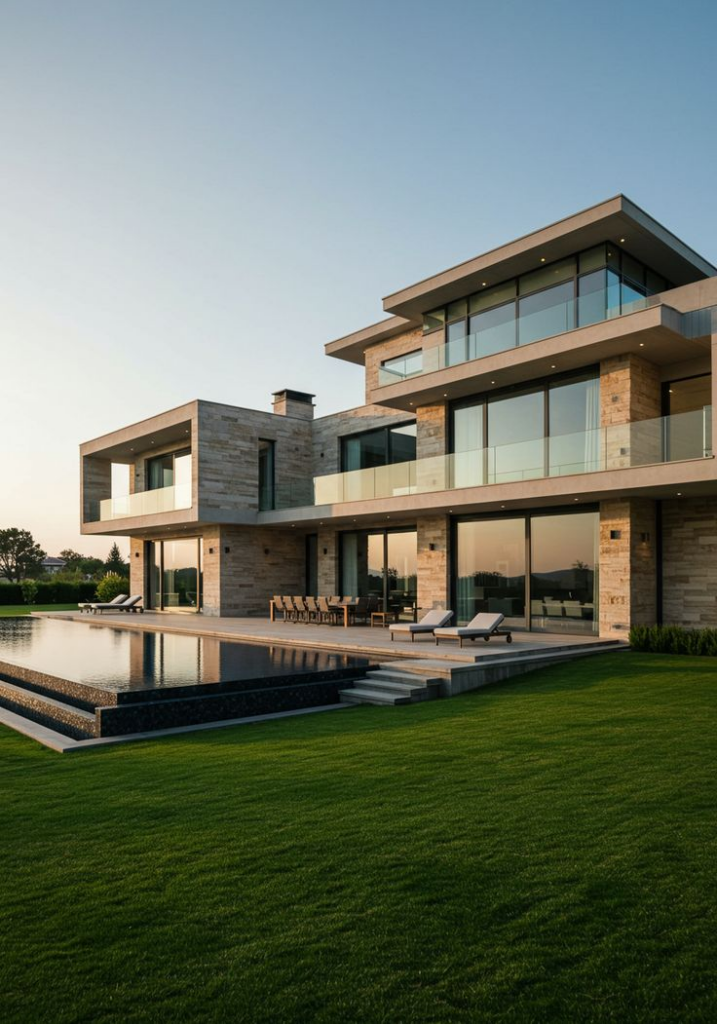
Consider this: if Property A is advertised at 1800 sq ft super built-up area with a carpet area of 1200 sq ft (a 33% loading), and Property B is also advertised at 1800 sq ft super built-up area but has a carpet area of 1350 sq ft (a 25% loading), Property B offers significantly more usable living space for the same advertised price. This critical distinction can save you thousands of dollars and prevent buyer’s remorse.
For those exploring investment properties in Atlanta or seeking rental income properties in Orlando, a deep understanding of these area metrics is crucial for accurate yield calculations and risk assessment. Paying for common areas is a necessary part of apartment living, but knowing the exact proportion allows for informed negotiation and investment strategy.
A Practical Approach for Savvy Buyers
As someone who has seen countless transactions unfold, I cannot overstate the importance of proactive questioning and thorough verification. Here are my top practical tips for navigating property square footage:
Demand Clarity on Advertised Metrics: Always ask the developer or real estate agent to specify which area measurement they are using in their advertisements and marketing materials. Don’t assume.
Focus on the Carpet Area: While the super built-up area is often the starting point for pricing, make it your priority to understand the carpet area. This is your direct living space. Request the floor plan that clearly demarcates the carpet area.
Calculate the Loading Factor: Once you know the super built-up area and the carpet area, you can calculate the loading factor ( (Super Built-up Area – Carpet Area) / Super Built-up Area ) 100%. This percentage will tell you how much of the advertised area is dedicated to common amenities. Compare this across different properties.
Understand Your Lifestyle Needs: A larger common area quotient might be acceptable, even desirable, if the building boasts exceptional amenities that align with your lifestyle – a top-tier gym, expansive green spaces, or a well-maintained pool. However, if you prioritize pure living space, a lower loading factor is more important.
Never Hesitate to Ask: Builders and agents are there to provide information. If something is unclear, ask for clarification. Request to see the official approvals and building plans that detail these measurements. If a developer is reluctant to provide this information or becomes evasive, it’s a red flag.
Consider Property Age and Project Type: Older buildings might have different area calculation methodologies. Similarly, the type of project – a sprawling luxury complex versus a compact urban development – will inherently influence the super built-up area to carpet area ratio.
Expert Insights for 2025 and Beyond
The real estate market continues to evolve, and with it, the expectations of buyers and the transparency offered by sellers. In 2025, we are seeing a stronger emphasis on functional space and the true value proposition of a property. While super built-up area will persist as a marketing tool, the discerning buyer will increasingly focus on carpet area and the efficiency of the development’s common area utilization.
Furthermore, advancements in digital visualization tools and augmented reality are allowing potential buyers to virtually “walk through” spaces and get a better sense of scale. However, these tools should be used to supplement, not replace, a clear understanding of the legally defined area measurements.
For investors in major metropolitan areas like New York City real estate opportunities or Los Angeles property market trends, understanding these metrics is crucial for maximizing returns. A property with a higher carpet area relative to its super built-up area offers a more efficient use of capital. Similarly, when exploring affordable housing options in Chicago or first-time homebuyer programs in Philadelphia, ensuring you’re paying for usable space is paramount.
Ultimately, the goal is to make an informed decision that aligns with your financial capacity and lifestyle aspirations. By diligently understanding the difference between carpet area, built-up area, RERA built-up area, and super built-up area, you empower yourself to make the best real estate investment.
Don’t let confusing terminology stand between you and your dream property. Take the time to educate yourself, ask the right questions, and always prioritize clarity in your real estate journey. Contact a trusted real estate professional today to discuss your specific needs and get personalized guidance on understanding property measurements and finding the perfect home.