America’s Real Estate in 2025: Navigating Obsolescence and Unlocking Transformative Value
For a decade, I’ve navigated the complex currents of the US real estate market, witnessing firsthand its cyclical nature and its profound, often subtle, transformations. As we stand in 2025, a stark reality confronts investors, business leaders, and communities across the nation: America’s real estate, much like its population, is aging. This isn’t merely about wear and tear; it’s about a fundamental, structural obsolescence driven by seismic demographic shifts, relentless technological innovation, and a reimagined economic landscape. Ignoring this reality is no longer an option; understanding and actively addressing it presents an unprecedented opportunity for those willing to embrace a new paradigm of value creation.
Growing up, I remember the stark contrast between burgeoning suburban developments and the tired, often neglected urban cores. What was once vibrant could quickly become irrelevant without strategic reinvestment. Today, this phenomenon has metastasized beyond isolated neighborhoods to encompass vast swaths of our built environment. Warehouses built for a pre-e-commerce era, office towers designed for a 9-to-5 commute, and retail centers reliant on predictable foot traffic—many of these once-prized assets are now quietly draining capital and hindering productivity. The headlines often fixate on interest rates or immediate market fluctuations, but the deeper, more profound risk lies in this pervasive stock of outdated buildings that simply no longer align with modern life or business demands. With capital markets normalizing and cheap debt no longer a crutch, real estate either generates tangible value, or it doesn’t.

The Silent Crisis: Obsolescence Redefined for 2025
Obsolescence in 2025 is far more insidious than a leaky roof or an outdated facade. It’s about a structural mismatch between the purpose for which a building was designed and the actual needs of its occupants and the broader economy. Consider an industrial warehouse lacking the clear heights, floor load capacity, or power infrastructure necessary for advanced robotics and automated sorting systems. That’s not just an old building; it’s an operational bottleneck, a competitive disadvantage for any enterprise relying on efficient logistics. Similarly, an office building that fails to offer robust digital infrastructure, collaborative spaces, and wellness amenities isn’t just an empty shell; it’s a deterrent to top talent and a drag on corporate culture.
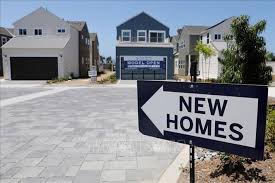
This isn’t just about commercial properties. The housing market, too, faces its own unique form of obsolescence. Many older homes, while structurally sound, lack the smart home integration, energy efficiency, or flexible layouts desired by contemporary families. As the “housing market froze” in previous years, many older owners stayed put, or even downsized into properties that put them in direct competition with younger generations seeking “starter homes.” This dynamic exacerbates supply issues and highlights a broader disconnect between available inventory and evolving lifestyle preferences.
For real estate private equity firms and strategic investors, understanding this redefined obsolescence is paramount. It shifts the focus from purely financial engineering to a profound emphasis on operational execution and intrinsic value creation. The question is no longer just “What’s the cap rate?” but “How does this asset actively contribute to the success and competitiveness of its users in the year 2025 and beyond?”
Demographics as Destiny: Reshaping Real Estate Demand
The forces driving this profound shift are deeply rooted in America’s demographic landscape. We’re witnessing a generational confluence unlike any before, fundamentally rewriting the rules for “commercial real estate investment strategy 2025.”
Firstly, “America’s real estate aging” directly mirrors its population. With US birth rates at historic lows and an average of 11,000 Americans retiring daily, the sheer volume of “aging population real estate impact” is undeniable. The “baby boomers” are not only transitioning an estimated $80 trillion in wealth but are also redefining retirement. This generation is wealthier, more active, and profoundly focused on experiences. This fuels demand for active adult communities, accessible healthcare facilities, and “alternative accommodations” like RV parks and upscale campgrounds, where multi-generational families can gather. For “healthcare real estate investment,” this means a burgeoning need for specialized clinics, assisted living, and wellness centers that are integrated into communities, moving beyond institutional models.
Simultaneously, “millennials and Gen Z,” now the dominant forces in the workforce and consumer markets, exhibit distinctly different preferences. These “Generation Z housing preferences” and “millennial spending habits real estate” emphasize sustainability, technology integration, community, and flexibility. They prioritize experiences over goods, demanding retail environments that offer more than just transactions – think “experiential retail transformation.” In residential, they seek “smart building technology investment” features, robust digital infrastructure, and amenities that foster connection and convenience, especially for on-demand grocery and package services. These demographic trends are not fleeting fads; they are structural shifts that dictate where value will be created for the foreseeable future, making “demographic impact on real estate” a core consideration for any forward-looking investor.
Technology’s Unstoppable Tide: Beyond Remote Work
While demographic shifts set the stage, technology acts as the accelerating catalyst. “Remote work” has permanently untethered a significant portion of the workforce from traditional offices, fundamentally transforming “workplace strategy real estate.” People and businesses now choose spaces that enhance their quality of life and optimize their operations, rather than simply being confined by geography. This has driven a bifurcation in the office market, with prime, amenity-rich, technologically advanced spaces thriving, while older, less adaptable buildings struggle with vacancy. The demand for “flex office space demand” has surged, pushing landlords to offer more than just square footage – they must offer service, flexibility, and a compelling work experience.
Beyond the office, technology’s impact on industrial and logistics real estate is nothing short of revolutionary. The rise of e-commerce has transformed warehouses from simple storage facilities into highly sophisticated “last-mile logistics facilities” and “data center real estate” for rapid distribution networks. The integration of robotics, AI, and automation demands higher clear heights, reinforced floors, advanced power systems, and specialized climate controls. A warehouse that was state-of-the-art twenty years ago is now likely an expensive impediment to efficiency, making “logistics real estate trends” a dynamic and high-growth sector for those who can adapt. “Sustainable industrial parks” are also becoming a key differentiator, appealing to companies with ESG mandates.
Furthermore, “digital infrastructure real estate” is no longer a luxury but a fundamental necessity across all asset classes. From ubiquitous high-speed internet in residential complexes to advanced cybersecurity for commercial tenants, the digital backbone of a property defines its utility. “Proptech investment 2025” is seeing massive growth, as technologies that optimize building operations, enhance tenant experience, and improve energy efficiency become non-negotiable for competitive assets. These aren’t just features; they’re foundational components of modern value.
Asset Class Deep Dive: The Shifting Landscape of 2025
The effects of these interconnected forces are manifesting differently across various asset classes, creating both significant challenges and remarkable “value-add real estate opportunities.”
Office: The “future of real estate investment” in office space is undeniably complex. Traditional central business districts (CBDs) continue to grapple with high vacancy rates, as companies rationalize their footprints and embrace hybrid models. CBRE data from 2025 points to a continued trend of significant office space slated for demolition or conversion, far outpacing new construction. This underscores the scale of obsolescence. However, this also creates opportunities for “adaptive reuse commercial properties.” Obsolete office buildings in prime locations can be reimagined as residential units, life sciences labs, or even vertical farms. The surviving office assets are those that function as experiential hubs, fostering collaboration and culture, equipped with cutting-edge technology and comprehensive amenities.
Industrial: Once considered a purely functional asset, industrial real estate is now at the forefront of technological innovation. The shift from human-centric to robotics-centric operations necessitates new designs. Older warehouses with low ceilings and narrow bays are being swiftly outcompeted by modern facilities offering 30-foot+ clear heights, expansive turning radii for autonomous vehicles, and robust power grids. “Last-mile logistics facilities” in urban cores are seeing unprecedented demand, as e-commerce giants race to deliver goods with speed and efficiency. “Sustainable real estate development” within the industrial sector, focusing on energy efficiency and resilient supply chains, is also gaining significant traction.
Retail: The “experiential retail transformation” is in full swing. The closures of countless brick-and-mortar stores, from national chains to local boutiques, have left a glut of vacant “retail chains” properties. Yet, these same footprints, often with ample parking and strategic locations, are proving ideal for “mixed-use development trends,” converting into fitness centers, medical clinics, entertainment venues, or even “early childhood education centers,” a critical need for millennial families. The focus has entirely shifted to creating compelling destinations that offer more than just products – they offer services, community, and memorable experiences.
Residential: “Generation Z housing preferences” and millennial needs are driving demand for technologically advanced, community-oriented housing. Smart apartments with integrated digital infrastructure, robust security for package deliveries, and flexible common areas are highly prized. The aging population is fueling a surge in specialized senior living facilities, from independent living to memory care, often designed with hospitality-level services. There’s also a growing appreciation for multi-generational living, where homes are designed to accommodate different family structures. The affordable housing crisis remains a significant challenge, driving innovation in construction techniques and public-private partnerships.
Niche & Emerging Opportunities: Beyond the traditional asset classes, several niche areas are showing significant growth. “Healthcare real estate investment” is broadening to encompass outpatient facilities, urgent care centers, and specialized medical office buildings, often located closer to residential communities. “Data center real estate” continues its exponential growth as the digital economy expands. Furthermore, “sustainable real estate development” and “ESG real estate investment” are no longer just buzzwords; they are becoming fundamental criteria for attracting capital and ensuring long-term asset value, pushing developers towards green building certifications, renewable energy integration, and socially responsible practices.
The New Investment Playbook: Value Creation in the “Age of Renewal”

For decades, real estate investing often resembled a passive stock trade: acquire, hold, and sell, largely underpinned by an expectation of continuous price appreciation fueled by cheap debt. In 2025, that playbook is obsolete. “Commercial real estate lending” has indeed seen a resurgence, but loans are now priced in a market where the 10-year Treasury yield hovers above 4.05%. This environment demands far greater discipline and a clear path to value creation beyond mere financial leverage.
Forward-looking investors are adopting a new “investment playbook” centered on active “operational execution” and “repositioning assets.” Strong returns no longer emanate from passive strategies but from transforming obsolete buildings into thriving businesses that cater to evolving generational and technological demands.
Consider the opportunities in “adaptive reuse commercial properties.” An industrial warehouse with 20-foot clear heights, once inadequate for modern robotics, can be strategically repurposed into specialized “climate-controlled storage” facilities, catering to high-value goods or even data storage. A vacant big-box retail store, once a symbol of decline, can become a state-of-the-art “early childhood education center,” a community healthcare hub, or an indoor sports complex. The key is to view the physical structure not as a fixed cost, but as a flexible platform that can be actively managed and adapted to meet shifting market demands.
This means investing in “smart building technology investment” to enhance efficiency and tenant experience. It means prioritizing “sustainable real estate development” to attract environmentally conscious tenants and secure long-term capital. It means conducting thorough market research to understand “Generation Z housing preferences” and “millennial spending habits real estate” before embarking on residential projects. Ultimately, it means treating real estate as an operating business, where consistent innovation and customer-centricity are as crucial as location.
The Transformative Imperative for Leaders
As an expert with a decade in this field, I can unequivocally state that we are at a pivotal moment. The choice for investors, CEOs, and community leaders is clear: allow America’s real estate to slowly age into pervasive obsolescence, freezing capital in empty shells and hindering economic growth, or actively engage in its profound renewal.
The winners in this evolving landscape will be those who embrace real estate as a strategic tool, a dynamic asset that can be proactively managed and reimagined to drive competitive advantage. They will understand that creating useful, relevant, and future-proof spaces is the ultimate form of “value-add real estate opportunities.” They will leverage insights from “demographic impact on real estate” and “proptech investment 2025” to create places that genuinely serve the evolving needs of everyone, from “baby boomers” enjoying retirement to “millennials and Gen Z” building their careers and families.
The future of American real estate is not about simply building new; it’s about intelligently transforming the old, unlocking dormant potential, and designing spaces that truly thrive in the 21st century.
Are you prepared to transform your portfolio and capture the immense value emerging from this era of renewal? Engage with a trusted advisor today to develop a forward-thinking “real estate private equity trends” strategy that turns obsolescence into opportunity and positions your investments for sustained success in the dynamic markets of 2025 and beyond.