
The Enduring Debate Over Voting Rights: An Analytical Look at Modern Challenges to Universal Suffrage
In the ever-evolving landscape of American democracy, the bedrock principle of universal suffrage often feels unassailable. Yet, from time to time, historical echoes and contemporary anxieties converge, leading to surprising and concerning calls for the re-evaluation, or even restriction, of fundamental voting rights. As we navigate 2025, the discourse surrounding who should vote, and why, has once again surfaced with particular intensity, prompting a critical analytical examination of its underpinnings, historical context, and potential ramifications.
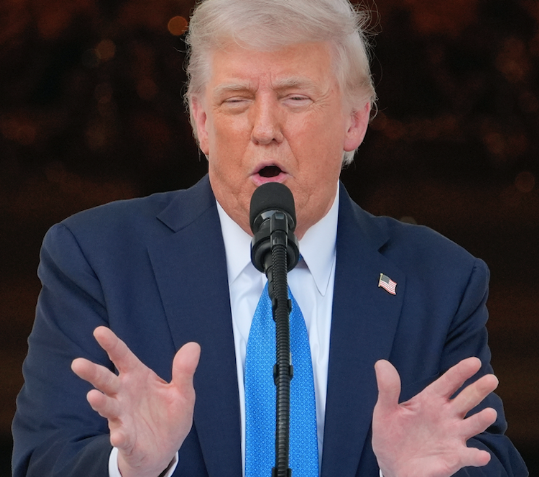
Recent public statements from certain figures, particularly following closely contested elections, have ignited a significant national conversation. These remarks have controversially linked specific electoral outcomes to the voting patterns of particular demographics, specifically women, and have gone as far as to suggest that women’s right to vote should be revoked or channeled through a “household vote” mechanism. This proposition, jarring to many within a modern democratic framework, demands a thorough and dispassionate analysis rooted in civic principles, historical precedent, and the foundational values of American governance.
The Historical Tapestry of Suffrage in America
To truly understand the gravity of any call to restrict voting rights, it is essential to revisit the arduous journey of universal suffrage in the United States. The nation’s founding, while revolutionary in many aspects, was far from universally democratic. The franchise was initially limited to white, property-owning men, a stark contrast to the inclusive ideals we strive for today. The expansion of voting rights has been a slow, incremental, and often tumultuous process, each step representing a hard-won battle for greater inclusion and the strengthening of democratic principles.
The abolition of slavery after the Civil War brought with it the 15th Amendment in 1870, theoretically granting African American men the right to vote. However, systemic barriers like poll taxes, literacy tests, and outright intimidation effectively disenfranchised many for nearly another century, highlighting that constitutional amendments alone did not always guarantee access to the ballot box. This period underscores the persistent struggle against forces seeking to limit political participation based on race.
Then came the monumental struggle for women’s suffrage. For decades, pioneering activists and suffragettes campaigned tirelessly, facing fierce opposition, ridicule, and even imprisonment. The arguments against women voting were disturbingly similar to some contemporary objections: that women were too emotional, intellectually incapable of rational political thought, primarily suited for domestic roles, and that their participation would disrupt the social order. Yet, driven by an unwavering belief in gender equality and civic engagement, these advocates pressed on. Their efforts culminated in the ratification of the 19th Amendment in 1920, unequivocally stating, “The right of citizens of the United States to vote shall not be denied or abridged by the United States or by any State on account of sex.” This amendment was not merely a legalistic change; it represented a profound societal shift, recognizing women as full citizens with individual political agency, directly impacting public policy and social progress.

The struggle for truly universal suffrage continued well into the 20th century, with the Civil Rights Movement culminating in the Voting Rights Act of 1965. This landmark legislation aimed to overcome legal barriers at the state and local levels that prevented African Americans from exercising their right to vote as guaranteed under the 15th Amendment. Subsequent amendments, like the 26th in 1971, lowered the voting age to 18, reflecting evolving social norms and the belief that those old enough to fight for their country were old enough to vote. Each of these historical junctures underscores a consistent national trajectory towards more inclusion, not less, recognizing that a broader base of civic engagement strengthens the republic.
Deconstructing Modern Arguments for Restriction
Against this backdrop of progressive expansion of voting rights, the recent calls to strip women of the right to vote represent a stark and jarring departure. Proponents of this view often cite specific election outcomes, particularly where women voters are perceived to have favored certain political parties or policies. The argument typically posits that women’s votes have led to “moral atrocities” or specific legislative changes that are deemed undesirable by those advocating for restriction. Claims have been made linking women’s suffrage to policies concerning abortion, LGBTQ+ rights, social welfare programs, and immigration, suggesting these policies would not exist or would be significantly different “if not for the female vote.”
This line of reasoning warrants careful analytical scrutiny. Firstly, it operates on a fundamental logical fallacy: correlating a demographic’s voting patterns with specific legislative outcomes does not equate to causation, nor does it justify the disenfranchisement of that entire group. Attributing complex legislative changes, which are the result of multifaceted political processes, to the voting behavior of a single demographic group oversimplifies political reality. Policy shifts are influenced by numerous factors, including societal evolution, economic conditions, technological advancements, judicial rulings, and the collective will of a diverse electorate, not solely the preferences of one gender.
Secondly, the notion of “moral atrocity” is inherently subjective and often tied to specific religious or ideological frameworks. In a pluralistic democracy like the United States, public policy is forged through debate and compromise among citizens holding diverse moral and ethical viewpoints. The legal framework of the U.S. does not privilege one moral code over another, but rather strives to protect the rights and freedoms of all its citizens, ensuring gender equality and protection from discrimination. To declare that certain policies, legally enacted, are “atrocities” solely because they do not align with a particular worldview, and then to blame the voting rights of half the population for their existence, is to fundamentally misunderstand the nature of representative governance and the importance of political participation from all sectors of society.
The “Household Vote”: A Step Backwards
Central to these recent arguments is the proposition of returning to a “household vote,” where women would share their political thoughts with male family members – fathers or husbands – who would then make the final voting decision for the household. This concept is deeply problematic on several levels and stands in direct opposition to centuries of democratic evolution and the very definition of individual liberty.
Historically, the concept of a “household vote” or “family vote” was largely a relic of aristocratic or patriarchal societies where land ownership, and therefore political power, resided with the male head of the household. It implicitly assumes a uniform political opinion within a household, suppressing individual agency and diversity of thought. In modern America, families are diverse in structure, composition, and political outlook. Spouses, adult children, and other household members often hold differing political views, and the idea of one person unilaterally deciding the vote for others undermines the principle of individual conscience and personal autonomy.
Furthermore, implementing a “household vote” would effectively relegate women to a secondary status within the political sphere. It would strip them of their individual voice and reduce their political identity to an extension of a male relative. This is a direct assault on the 19th Amendment and the concept of equal citizenship. It would undermine progress made in gender equality and would likely have profound negative economic impact of policy on women’s rights and opportunities, as policies crafted without their direct input might neglect their unique concerns and needs.
Such a system would also introduce immense practical complexities and potential for coercion. How would such a vote be legally enforced? Who would monitor the “sharing of thoughts” and the “final decision-making”? It opens the door to potential abuses, family conflicts, and a significant reduction in overall civic engagement as millions lose their direct voice.
Impact on Democratic Principles and Social Progress
The implications of restricting voting rights, particularly based on gender, extend far beyond the immediate political outcomes. Such a move would fundamentally undermine the core tenets of American democracy. Universal suffrage is a cornerstone of our representative system, ensuring that government is “of the people, by the people, for the people,” meaning all people.
Erosion of Equality: Removing the right to vote from a specific group based on immutable characteristics like gender directly violates the principle of equal protection under the law. It signals that certain citizens are less capable or less trustworthy to participate in their own governance, fostering division and resentment.
Weakening of Representation: A government that does not accurately reflect the diverse voices and perspectives of its population is inherently less legitimate and less effective. Policies developed without the direct input of half the population would inevitably be less comprehensive and less responsive to the nation’s true needs. This could lead to a significant decline in social progress and create new inequalities.
Threat to Political Stability: History demonstrates that attempts to disenfranchise large segments of the population often lead to social unrest and political instability. Suppressing voices does not eliminate dissent; it merely forces it into less constructive channels. Maintaining broad political participation is crucial for national cohesion and stability.
Damage to International Standing: The United States has long championed democratic values and human rights on the global stage. Rolling back fundamental voting rights would severely damage its credibility and influence, sending a chilling message about the state of its own democratic institutions and its commitment to human rights.
Moreover, such proposals ignore the undeniable positive contributions women have made to the electoral process and public life since gaining the right to vote. Women have served in every branch of government, from local councils to the highest courts and legislative bodies, bringing diverse perspectives and skills. Their participation has broadened the scope of policy discussions, leading to advancements in areas like education, healthcare, worker protections, and environmental conservation, all of which benefit society as a whole.
Navigating the 2025 Political Discourse
In 2025, the proliferation of information – and misinformation – makes robust and informed political discourse more critical than ever. When ideas that challenge long-established constitutional rights emerge, it becomes incumbent upon citizens, educators, and leaders to engage analytically, drawing on historical facts and democratic principles.
Safeguarding voting rights requires continuous vigilance and proactive engagement. This includes:
Education: Ensuring that all citizens understand the history of voting rights, the significance of the 19th Amendment, and the mechanics of the electoral process.
Voter Protection: Advocating for policies that protect and expand access to the ballot box, rather than restrict it.
Informed Dialogue: Fostering environments where contentious ideas can be debated with respect, relying on evidence and reasoned arguments, rather than rhetoric that aims to divide or disenfranchise.
Civic Responsibility: Encouraging high levels of civic engagement from all eligible citizens, recognizing that participation is the most powerful defense against any attempts to undermine democratic norms.
The challenges to universal suffrage are not new, but their specific manifestations evolve with each era. The current discussion serves as a powerful reminder that democratic rights, once secured, are never permanently guaranteed. They require constant affirmation, protection, and active participation from an informed citizenry.
Conclusion
The call to strip women of their voting rights is more than a fleeting political statement; it is a profound challenge to the foundational principles of American democracy. An analytical examination reveals it to be historically regressive, logically flawed, and deeply contrary to the values of equality, individual autonomy, and representative governance that the United States purports to uphold.
As a nation, our trajectory has consistently been one of expanding rights and strengthening the democratic franchise, not retracting it. To reverse course and disenfranchise an entire demographic based on perceived electoral outcomes would be to abandon the lessons of history and undermine the very legitimacy of our government. In 2025, the task before us is clear: to reaffirm our commitment to democratic principles, to champion universal suffrage, and to foster a political landscape where every eligible citizen’s voice is not only heard but valued, ensuring the resilience and integrity of our republic for generations to come. The enduring strength of American democracy relies on the unwavering commitment to the full and equal political participation of all its citizens.