
The Great Divide: Navigating Your Dream Home Choice Between a House and a Condo in 2025
The housing market in 2025 is a dynamic landscape, ever-evolving with new technologies, shifting lifestyles, and persistent economic currents. For prospective homebuyers, a fundamental question often emerges at the very beginning of their search: should I buy a detached single-family home (what many might envision as a “villa” or traditional house) or opt for a condominium unit (often colloquially referred to as an “apartment” in the context of ownership)? This isn’t just a transactional decision; it’s a profound choice that shapes your daily life, financial future, and long-term well-being. With over a decade of navigating these waters, I’ve seen firsthand how crucial it is to understand the nuances beyond the initial aesthetics or price tag. This comprehensive guide aims to demystify this critical decision, providing you with a robust framework to choose the dwelling that truly aligns with your aspirations and needs in the current market.
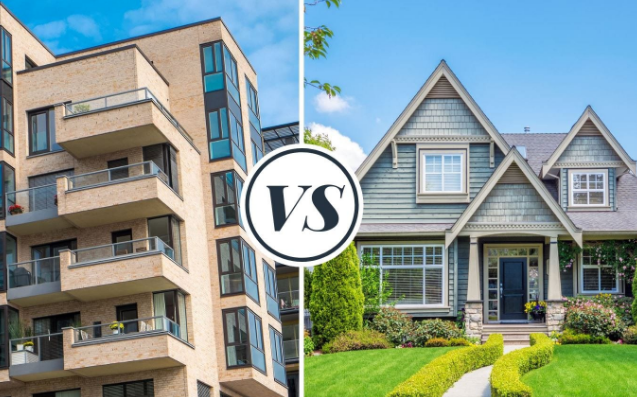
Space: Beyond the Square Footage – Understanding Your Domain
When we talk about space, it’s not merely a matter of how many square feet are on the listing sheet. It’s about the quality of that space, its functionality, and how it integrates with your life.
The Single-Family Home (House): A Realm of Autonomy and Expansion
A detached single-family home typically offers significantly more interior living space. We’re talking multiple bedrooms, often several bathrooms, dedicated common areas like living rooms, dining rooms, and perhaps a family room, along with a separate kitchen. Beyond the walls, a private yard is often the crowning glory – a canvas for gardening, a safe haven for pets, a playground for children, or an oasis for outdoor entertaining. This expanse provides an unparalleled sense of privacy. You’re not sharing walls, ceilings, or floors with immediate neighbors in the same way you would in a multi-unit building. This autonomy extends to aesthetic choices; with a single-family home, you have far greater freedom to renovate, remodel, and decorate your exterior as you see fit, subject only to local zoning ordinances and homeowner association (HOA) rules if you’re in a planned community.
In 2025, the rise of remote work continues to make dedicated home office spaces or flexible rooms for hybrid work setups a non-negotiable for many. A house often provides the spatial luxury to create these distinct zones without compromising other living areas. Furthermore, many single-family homes come with basements or attics, offering ample storage solutions or the potential for future finished living areas. The ability to expand, whether through an addition or by converting existing unfinished spaces, also adds long-term value and flexibility for growing families or evolving needs. The installation of a private pool or creating a bespoke outdoor kitchen is often feasible, allowing for truly personalized leisure and entertainment options right at your doorstep. However, this expansive domain comes with a significant trade-off: maintenance. From landscaping to roof repairs, gutter cleaning to exterior painting, the responsibility for every inch of the property rests squarely on your shoulders. These home maintenance costs can add up quickly and require both time and financial planning.
The Condo/Co-op (Apartment): Optimized Living and Shared Luxury
A condominium, or co-op in certain markets like New York, presents a different paradigm of space. While individual units can vary greatly in size, they are generally more compact than a detached house. The focus here is on optimized living – making the most of every square foot with efficient layouts. The primary advantage of a condo is its low-maintenance lifestyle. The exterior of the building, common areas (hallways, lobbies, elevators), and often critical infrastructure like roofing and foundation are maintained by the homeowners’ association. This frees up your valuable time, allowing you to focus on your career, hobbies, or simply relax without the constant worry of yard work or exterior repairs.
Condos are frequently situated in prime urban locations, offering unparalleled access to city amenities, public transportation, and a vibrant street life. For those who prioritize walkability and proximity to work, dining, and entertainment, a condo in an urban living advantage zone is often the ideal choice. In 2025, many modern condo developments are integrating smart home technology integration from the ground up, offering seamless control over lighting, climate, and security. While private outdoor space might be limited to a balcony or patio, the trade-off is often access to an array of shared luxury amenities – think state-of-the-art gyms, rooftop terraces, swimming pools, co-working spaces, and even concierge services. These amenities, while shared, are professionally managed and maintained, offering a lifestyle that would be prohibitively expensive to replicate in a private home. The compact nature of condo living can, however, present challenges for storage or those with extensive hobbies requiring dedicated space. Privacy might also be a concern for some, as shared walls and closer proximity to neighbors are inherent to multi-unit dwellings.
Amenities & Lifestyle: What Suits Your Rhythm?
The amenities offered, both inherent and shared, play a significant role in defining your daily lifestyle.
Single-Family Home: Curated Comforts
The amenities in a single-family home are largely what you choose to create. Want a sprawling garden? You design it. Dream of a private home theater? You build it. The beauty lies in the bespoke nature of these comforts. You have the freedom to invest in specific features that cater precisely to your needs and desires. This might include a sophisticated security system, an advanced kitchen appliance suite, or even a personal fitness studio. The absence of an HOA (unless in a master-planned community) means fewer rules dictating your choices. Your smart home technology choices are entirely your own, from energy-efficient solar panels to integrated voice assistants. This independence is a significant draw for many homeowners, allowing them to craft an environment that is a true extension of themselves. However, the initial capital outlay and ongoing maintenance of these private amenities are entirely your responsibility. Community engagement typically occurs through local parks, libraries, and neighborhood events, rather than within the confines of your immediate residence.

Condo/Co-op: Curated Community and Shared Splendor
Condo living often means inheriting a suite of shared amenities designed to enhance a communal lifestyle. In 2025, these aren’t just basic gyms; they are often comprehensive wellness centers, luxurious resident lounges, dedicated co-working spaces, pet-friendly facilities like dog runs, and secure package delivery rooms. Many newer developments even boast EV charging stations for residents. These features contribute significantly to the appeal of luxury condo amenities, offering convenience and a sense of elevated living. The presence of on-site management and robust security systems often provides an added layer of peace of mind.
The HOA, while a source of rules and monthly fees, is also the engine that delivers these amenities. It ensures professional upkeep, handles major repairs, and often organizes social events, fostering a sense of community among residents. This means less personal responsibility for maintenance but also less individual control. Adherence to HOA rules and regulations is paramount, covering everything from exterior decor to pet policies and noise levels. For individuals who thrive in social environments, enjoy convenience, and prefer to delegate maintenance responsibilities, the communal amenities of a condo offer a compelling lifestyle.
Location, Location, Lifestyle: Where Do You Thrive?
The adage “location, location, location” holds immense truth, particularly when deciding between a house and a condo.
Single-Family Home: Suburban Serenity or Rural Retreat
Single-family homes are often synonymous with suburban or rural living. These areas typically offer larger lots, quieter streets, and a slower pace of life. They are often sought after for their top-rated school districts, making them ideal for families with children. The extra space between homes provides greater privacy and a sense of tranquility. While commutes might be longer into urban centers, many find the trade-off worthwhile for the quality of life, access to nature, and reduced urban density. In a post-pandemic world, where many still embrace hybrid or fully remote work models, the necessity of being directly adjacent to an office has diminished for some, making suburban and even exurban locations more attractive. This shift impacts property value appreciation, as formerly less desirable areas see increased demand. Owning a car, or even multiple vehicles, is almost a necessity in most suburban settings due to less robust public transportation infrastructure.
Condo/Co-op: Urban Vibrancy and Connectivity
Condos are predominantly found in dense urban cores or vibrant city neighborhoods. Their strategic locations offer unparalleled public transport access, often allowing residents to forgo car ownership entirely. Proximity to cultural attractions, diverse dining options, major employment hubs, and entertainment venues defines the urban living advantages of a condo. For those who relish being in the heart of the action, who prefer to walk or bike to their destinations, and who crave constant stimulation, a condo in a bustling city environment is a perfect match. The “neighborhood” often extends beyond the building itself, becoming an integral part of one’s identity. While green space might be limited within the immediate vicinity, many urban condos are near city parks, waterfronts, or bike paths. The demand for well-located urban condos remains strong, making them attractive for real estate investment in city centers, particularly among young professionals, empty nesters, and those seeking a cosmopolitan lifestyle.
The Financial Framework: Budgeting for Your Future
Perhaps the most critical aspect of this decision revolves around finances. It’s not just about the sticker price, but the entire lifecycle cost of ownership.
Initial Investment: Entry Points and Accessibility
Generally, a single-family home commands a higher purchase price than a comparable condo unit in the same general market. This often translates to a larger down payment requirement and a more substantial mortgage loan. For first-time home buyers, this can be a significant hurdle. However, various first-time home buyer programs and down payment assistance initiatives exist that can help bridge this gap, especially for single-family homes in certain areas. In 2025, mortgage rates continue to fluctuate, making it crucial to work with a reputable lender to secure favorable terms.
Condos, with their typically smaller footprint and shared land ownership, often offer a more accessible entry point into homeownership. This lower purchase price can make them particularly attractive to single buyers, young couples, or those with tighter budgets aiming to build equity without the upfront financial burden of a house. While the purchase price may be lower, it’s vital to understand that the mortgage qualification process for condos can sometimes be more complex, especially for buildings with high concentrations of renters or significant pending litigation against the HOA.
Ongoing Costs: The True Price of Ownership
This is where the financial models diverge significantly.
Single-Family Home:
Property Taxes: These are typically higher for single-family homes due to their larger land footprint and overall assessed value. These can fluctuate based on local government needs.
Homeowner’s Insurance: Covers the structure and contents against perils. Premiums can vary based on location, age of home, and deductible.
Utilities: You are responsible for all utilities (electricity, gas, water, sewer, trash).
Maintenance & Repairs: This is the big one. From routine landscaping to unexpected roof repairs, HVAC servicing, plumbing issues, and appliance breakdowns, these costs are entirely yours. Budgeting 1-3% of the home’s value annually for maintenance is a common guideline, which can quickly add up to significant figures over time. Understanding long-term maintenance costs is crucial for financial planning.
HOA Fees (if applicable): If in a planned community, these will be an additional cost.
Condo/Co-op:
HOA Fees: This is the most substantial ongoing cost. These monthly fees cover the maintenance and repair of all common areas, shared amenities, building insurance (master policy), and often some utilities (e.g., water, trash). A well-managed HOA will also allocate a portion to reserves for future major capital expenditures (like a new roof or elevator repair). Understanding the HOA fees breakdown and the health of the reserve fund is paramount. A low HOA fee might sound appealing but could signal insufficient reserves, leading to unexpected special assessments down the line.
Property Taxes: Based on the assessed value of your individual unit.
Individual Unit Insurance (HO-6 Policy): This policy covers the interior of your unit, your personal belongings, and liability, complementing the building’s master insurance policy.
Utilities: You are typically responsible for electricity and internet within your unit, though sometimes water/gas might be included in the HOA fees.
Interior Maintenance: While the HOA handles the exterior, you are responsible for everything within your unit – appliances, interior paint, plumbing, and electrical issues.
Investment Potential: Building Equity and Wealth
Both houses and condos can be sound real estate investments, but their appreciation trajectories can differ.
Single-Family Home: Historically, single-family homes tend to appreciate robustly, largely due to the land component. Land is finite, and its value generally increases over time. The ability to renovate, add an ADU (Accessory Dwelling Unit), or simply improve the property through landscaping can significantly boost its home equity growth. This offers greater control over increasing your property’s value. They also tend to have higher rental income potential in many markets, especially for families.
Condo/Co-op: Condo appreciation is often more tied to the building’s overall condition, the quality of its amenities, and the specific desirability of its location. While land value is a component, it’s shared among all unit owners. The value can also be influenced by the financial health of the HOA and its ability to maintain and upgrade the building. Condos can be excellent investments, especially in rapidly growing urban areas, but their appreciation might be less dramatic or consistent than detached homes, particularly when considering the total cost of ownership including HOA fees. Keeping an eye on market trends 2025 is vital for understanding potential returns for both types of properties.
Beyond the Basics: Additional Factors in 2025
Several contemporary factors should also weigh into your decision.
Remote Work Impact: The lasting effects of remote and hybrid work have reshaped buyer preferences. Many buyers in 2025 are seeking more dedicated office spaces or flexible rooms, which a single-family home often provides more readily. Conversely, some who are fully remote are choosing to live further out in more affordable areas, while others value the ability to live in a highly walkable urban condo and leverage shared co-working spaces within their building or neighborhood.
Sustainability: Energy efficiency and eco-friendly features are increasingly important. Newer single-family homes and condo developments are incorporating green building materials, smart thermostats, and efficient appliances. Consider the environmental footprint and potential utility savings. Are there opportunities for solar panel installation on a house? Does the condo building have a robust recycling program or sustainable living solutions?
Technology & Connectivity: Beyond smart home features, reliable high-speed internet is a utility in 2025. Verify connectivity options for both types of properties. Consider smart home security systems and the infrastructure to support advanced home networking.
Accessibility: As the population ages, accessibility becomes a key consideration. Single-story homes or condos with elevator access are often preferred for long-term living.
Resale Value: Consider the long-term marketability. Both houses and condos have strong markets, but demand can fluctuate based on economic cycles and shifting demographics. Researching local real estate investment trends and speaking with a knowledgeable local agent can provide crucial insights into which property type is experiencing greater demand and appreciating more consistently in your target area.
Making Your Informed Decision: A Personalized Framework
Ultimately, the “better” choice between a single-family home and a condo is deeply personal. There is no universally correct answer; there is only the right answer for you. To navigate this monumental decision, ask yourself these guiding questions:
What is your financial capacity? Realistically assess your budget for both upfront costs and ongoing expenses, including mortgage, taxes, insurance, and the crucial distinction between maintenance/repairs versus HOA fees. Don’t forget to factor in potential financial planning for homeownership for future needs like education or retirement.
What kind of lifestyle do you desire? Do you dream of weekend gardening, private BBQs, and quiet evenings, or do you thrive on urban energy, shared amenities, and a walk-to-everything convenience?
How much time and energy are you willing to dedicate to home maintenance? Are you a DIY enthusiast, or do you prefer to delegate these tasks?
What are your long-term goals? Do you plan to expand your family? Do you foresee needing accessible features as you age? Are you looking for a property to significantly build home equity or one that offers a steady, lower-risk investment with a strong lifestyle component?
How important is privacy versus community to you?
What are your non-negotiable needs in terms of location? Commute, school districts, proximity to family, or access to specific amenities?
It is highly recommended to consult with a seasoned real estate agent who specializes in your desired areas and property types. They can provide invaluable insights into local market conditions, specific property values, and the reputation of HOAs. A financial advisor can also help you understand the long-term implications of each choice on your overall wealth strategy.
Conclusion
The choice between a single-family home and a condo in 2025 is more complex than ever, reflecting an array of evolving preferences and economic realities. Both offer distinct advantages and disadvantages, catering to different financial capacities, lifestyle aspirations, and long-term goals. By meticulously evaluating your needs for space, understanding the implications of various amenities, pinpointing your ideal location, and conducting thorough financial due diligence, you can move forward with confidence. Whether you ultimately choose the expansive freedom of a detached house or the optimized convenience of a condominium, your decision will lay the foundation for your next chapter. Happy home hunting!