


The Definitive Guide to Square Footage: Navigating Property Measurement in the 2025 US Real Estate Market
The American dream of homeownership, or the strategic acquisition of investment properties, hinges on countless details, but few are as fundamental and yet frequently misunderstood as a property’s square footage. As a seasoned real estate professional with over a decade in the trenches, I’ve seen firsthand how a lack of clarity here can lead to costly mistakes, missed opportunities, and endless frustration. In 2025, with market dynamics evolving faster than ever, understanding the nuances of how space is measured isn’t just helpful—it’s absolutely critical for anyone looking to buy, sell, or invest in US real estate.
Forget the simplistic “total square feet” you see online. That number often glosses over a complex reality, where different definitions dictate everything from appraisal values and property taxes to insurance costs and market appeal. We’re going to deep-dive into the core concepts, dissecting what these measurements truly mean for you, and equipping you with the expert knowledge to navigate the market with confidence and precision.
The Bedrock: Gross Living Area (GLA) & Finished Square Footage (FSF)
In the US residential market, the terms “Gross Living Area” (GLA) and “Finished Square Footage” (FSF) are paramount. These are the closest counterparts to what other markets might call “Carpet Area” in terms of representing usable, finished, habitable space.
Gross Living Area (GLA):
This is the holy grail for appraisers, lenders, and ultimately, your mortgage. GLA represents the total area of finished, above-grade residential space. “Above-grade” means areas that are entirely above the ground level. To be included in GLA, the space must meet specific criteria:
Finished: It must have walls, floors, and ceilings similar to the rest of the dwelling. Think drywall, flooring (carpet, hardwood, tile), and finished ceilings. Unfinished spaces like bare concrete floors, exposed studs, or unpainted ceilings are excluded.
Heated/Cooled: The space must be heated and/or cooled by the home’s primary system, maintaining a comfortable living temperature.
Direct Access: It must be directly accessible from other finished living areas of the house.
What’s INCLUDED in GLA/FSF:
Bedrooms, bathrooms, kitchens, living rooms, dining rooms, family rooms.
Finished attics or dormers (if they meet height requirements and are accessible).
Finished basements if they are entirely above grade. This is a crucial distinction. A “walk-out” basement where one side is entirely at ground level might be partially included, but fully subterranean basements are generally not part of GLA.
Finished accessory dwelling units (ADUs) if they are physically connected to the main dwelling in a way that allows them to be considered part of the primary residence (though often ADUs have their own separate calculations).
What’s EXCLUDED from GLA/FSF:
Garages: Attached or detached, they are never considered GLA, even if finished and heated.
Unfinished Basements: This is a major one. A basement, even if partially finished, is typically excluded from GLA unless it’s entirely above grade. Many homes advertise “finished basements” but appraisers will differentiate this from GLA.
Open Decks, Patios, Porches: These are outdoor spaces, by definition not enclosed or finished as living area.
Enclosed Porches/Sunrooms (often): Unless they are built to the same construction standards as the main house, are permanently heated/cooled, and are integrated into the year-round living space, they might be excluded. Three-season rooms are a common example of exclusion.
Attics (unfinished): Obvious exclusion.
Areas with Sloped Ceilings: Spaces where the ceiling height falls below a certain standard (e.g., 5-7 feet, depending on local code or appraisal standards) for a significant portion of the room may be excluded or only partially counted.
Why GLA Matters:
GLA is the benchmark for comparing properties, calculating price per square foot (“cost per square foot analysis”), and critically, it’s what mortgage lenders and appraisers primarily use to determine a property’s value. A property with a large “total square footage” but a smaller GLA will typically appraise for less than one with equivalent total square footage but a higher GLA. Misrepresenting GLA can lead to appraisal gaps, delaying or even derailing a transaction.
Beyond GLA: Total Under-Roof Area & Property Footprint
While GLA focuses on finished above-ground living space, other measurements provide a broader picture, especially for builders, investors, and homeowners looking at the full scope of their property.
Total Under-Roof Area / Gross Area:
This measurement encompasses all square footage under the home’s roof, regardless of whether it’s finished or unfinished, above or below grade.
What’s INCLUDED:
The entire GLA.
Attached garages.
Finished and unfinished basements (including subterranean ones).
Enclosed sunrooms or screened porches that are structurally part of the main building, even if not fully finished or permanently heated/cooled to GLA standards.
Any other structural space directly under the primary roofline.
Why Total Under-Roof Area Matters:
Construction Costs: Builders use this to estimate material and labor costs.
Insurance Premiums: Insurers often consider the total structure’s footprint for replacement cost.
Property Tax Assessments: Local assessors might use a broader definition of square footage than GLA for tax purposes, as even unfinished space adds value to the property’s overall structure.
Future Expansion/Renovation Potential: Buyers looking to expand or finish a basement will find this metric useful. Knowing the total under-roof area gives you a sense of the “envelope” you have to work with.
The “Property Footprint” (Site-Specific Considerations):
This isn’t a strict square footage measurement of the house itself but rather the total area that the building (or buildings) occupy on the land. It’s crucial for understanding zoning, setbacks, and land utilization. While not directly comparable to “Super Built-Up Area” from other markets, it brings in the concept of shared or regulated space.
Why it Matters (especially in 2025):
Zoning & Local Ordinances: Regulations dictate how much of your lot can be covered by impervious surfaces (buildings, driveways, patios) or how close you can build to property lines (setbacks). This limits future expansion.
Environmental Impact: With growing emphasis on sustainable building and stormwater management, the property footprint influences runoff and green space.
HOA Restrictions: Homeowners Associations often have strict rules on building size relative to lot size, exterior modifications, and even the appearance of accessory structures.
Multi-Family & Shared Spaces: A US Perspective
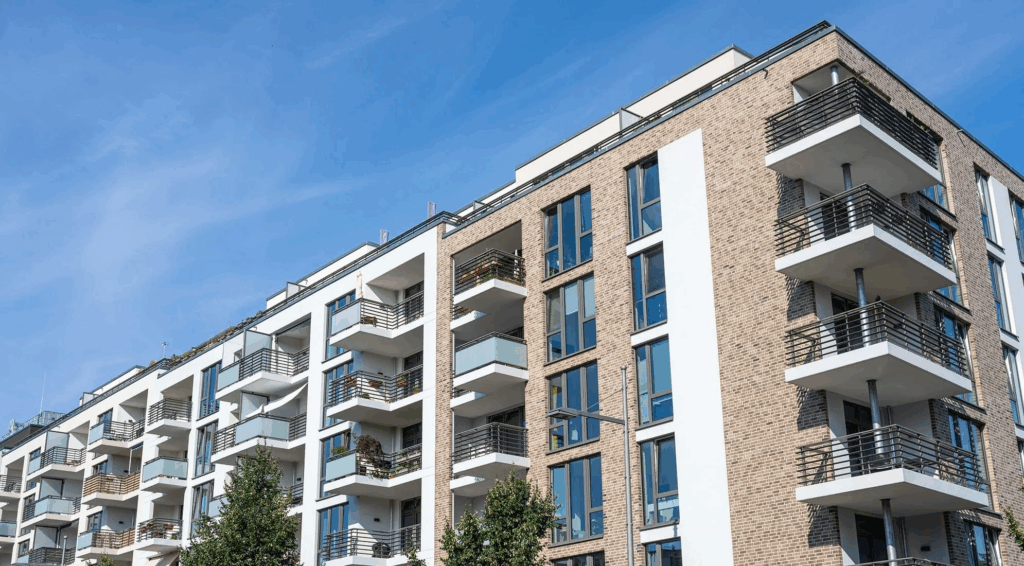
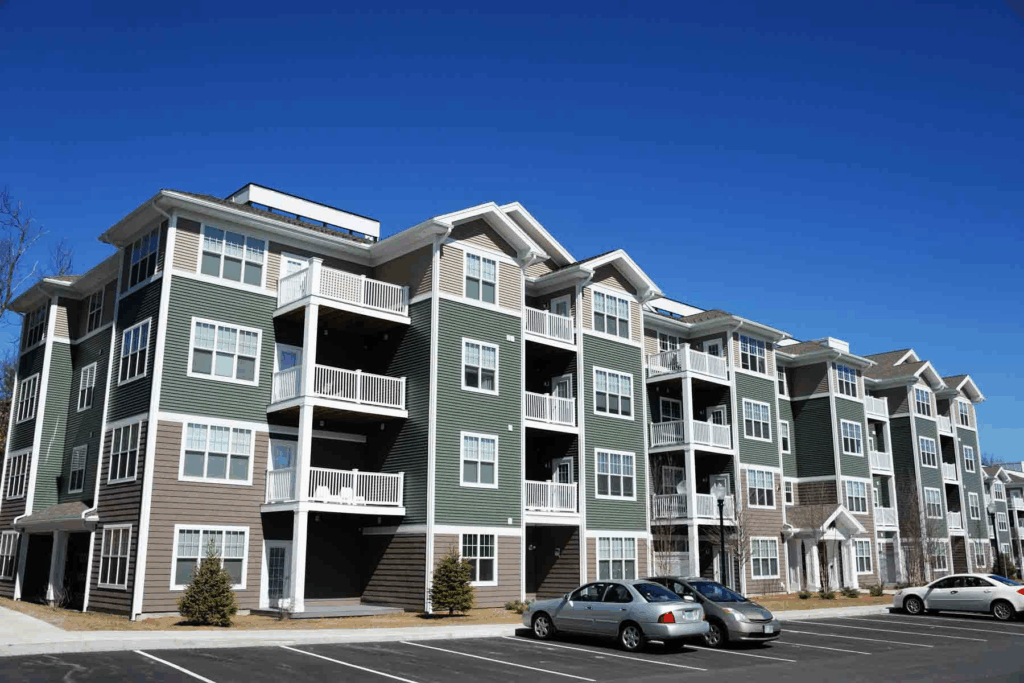
For condos, co-ops, and planned unit developments (PUDs), understanding common areas and their impact on your ownership is vital. Unlike “Super Built-Up Area,” which bundles a proportionate share of common areas into a single “sellable” square footage, US practices are more transparent but require careful attention.
Private Unit Square Footage:
This refers to the interior dimensions of your individual unit, akin to GLA. This is the space you legally own and exclusively occupy.
Common Elements / Common Areas:
These are spaces owned jointly by all unit owners, managed by the HOA or co-op board.
What’s INCLUDED:
Lobbies, hallways, stairwells, elevators.
Fitness centers, pools, clubhouses, recreational facilities.
Landscaped grounds, shared parking structures, utility rooms.
The structural components of the building (roof, exterior walls, foundations).
Impact on Owners (The “Real Cost”):
HOA Fees: These monthly or annual fees cover the maintenance, repair, and often insurance of the common elements. The larger and more amenity-rich the common areas, the higher the fees.
Property Value: While you don’t “own” a square footage share of the common areas in the same way you do your unit, the quality and extent of these amenities significantly impact your property’s market value and desirability.
Limited Common Elements: Some elements, like balconies, patios, or dedicated parking spots, might be “limited common elements” — meaning they are for your exclusive use but are still owned by the HOA, with maintenance responsibilities varying by association.
2025 Market Dynamics: Square Footage in a Data-Driven World
The real estate landscape in 2025 is increasingly shaped by technology, data analytics, and evolving consumer preferences. Here’s how square footage plays into these trends:
AI & Predictive Analytics: Advanced algorithms are crunching vast datasets, including square footage measurements, to provide more accurate valuations and market forecasts. Discrepancies in reported square footage can throw these models off, impacting everything from listing prices to investment potential.
Virtual & Augmented Reality Tours: High-definition 3D scans and VR tours offer unprecedented transparency into property dimensions. Buyers can “walk through” a digital twin, making it easier to spot discrepancies or get a true feel for space. Accurate floor plans and square footage data are crucial here.
Sustainability & “Green Square Footage”: While not a direct measurement of space, the efficiency of square footage (e.g., how well it’s insulated, energy consumption per square foot) is gaining immense importance. Smart home integrations, energy-efficient designs, and sustainable materials add significant value, even without changing the physical dimensions.
Hybrid Living & Multi-Purpose Spaces: The demand for flexible square footage that can adapt from a home office to a gym, or guest room, is at an all-time high. Buyers are scrutinizing layouts and the usability of every square foot, not just the raw number.
Data Verification & Due Diligence: With so much information available online, the accuracy of square footage data is under greater scrutiny. Savvy buyers are cross-referencing listings with public records, appraisal reports, and even hiring independent measurers.
Practical Wisdom for Buyers and Sellers (The Expert’s Edge):
As someone who’s navigated countless transactions, here’s my seasoned advice:
For Buyers:
Don’t Assume: Never take the advertised square footage at face value. It could be from tax records (which can be notoriously inaccurate or outdated), builder plans (which sometimes include exterior walls), or a previous appraisal using different standards.
Prioritize GLA: When comparing properties, always try to get the GLA. This is your most reliable metric for actual living space and appraisal value. Ask your agent for the appraiser’s sketch from a recent appraisal or request a new measurement if concerned.
Understand “Finished Basement” vs. GLA: Be clear on whether a finished basement is included in the advertised square footage. Often, it’s listed as “total square footage” but won’t count towards GLA, impacting the loan and appraisal.
Visualize the Space: Use professional floor plans. Better yet, walk the property with a tape measure or laser measurer. Pay attention to ceiling heights, especially in attics or unique architectural spaces.
Ask About Common Elements (Condos/HOAs): For multi-family units, understand what your HOA fees cover. What amenities do you get for that cost? What are the rules for modifying your “limited common elements” like balconies?
Factor in Usability: A 2,000 sq ft home with a poor layout might feel smaller and less functional than an 1,800 sq ft home with an efficient, open plan.
For Sellers:
Be Transparent: Providing accurate square footage up front builds trust and avoids issues later. The best practice is to base your listing on a recent appraisal report or a professional measurement.
Highlight ALL Value-Adding Space: If you have a beautifully finished basement that isn’t GLA, highlight its features. Call it “Lower Level Finished Space” or “Bonus Room,” but differentiate it clearly from your “Gross Living Area.”
Have Documentation Ready: Be prepared to provide floor plans, appraisal reports, or building permits that substantiate your property’s dimensions.
Understand Your Local Market: In some areas, buyers place a higher premium on total under-roof area (e.g., for storage or workshop space), while in others, GLA reigns supreme. Tailor your marketing accordingly.
Professional Photography & Virtual Tours: Invest in quality visuals that accurately convey the spaciousness and functionality of your home. This helps buyers understand how every square foot is utilized.
A Crucial Case Study (Modern Day Dilemma):
Imagine a listing in 2025 for a charming suburban home advertised as 2,500 sq ft. A potential buyer, leveraging advanced online tools, cross-references this with tax records and an old appraisal from 2018. The tax records show 2,200 sq ft, while the appraisal reports 1,900 sq ft of GLA with an additional 600 sq ft for a “finished basement.” The discrepancy creates immediate distrust.
Upon deeper investigation, it’s revealed:
The seller’s agent combined the 1,900 GLA with the 600 sq ft finished basement to get 2,500 sq ft, but presented it as a single “total” number without clarification.
The tax assessor’s office hadn’t updated their records since a sunroom addition was permitted, which was fully heated and finished but not consistently accounted for.
The 2018 appraisal excluded a small, finished attic room due to non-standard ceiling heights in part of the space.
The expert solution? A new, independent measurement and appraisal. This clarifies the 1,900 sq ft GLA, adds the sunroom’s 150 sq ft to GLA (as it now meets criteria), and separately lists the 600 sq ft finished basement area. This honest presentation, though potentially lower in the “headline number,” builds buyer confidence, leads to a smoother appraisal, and ultimately, a successful transaction at a fair market value. In 2025, transparency and accuracy will always trump inflated numbers.
Your Next Step Towards Informed Real Estate Decisions
Navigating the complexities of square footage in today’s dynamic US real estate market requires an informed perspective and a meticulous eye. Whether you’re a first-time homebuyer, a seasoned investor, or preparing to sell your cherished property, understanding these critical measurements is the foundation of smart decision-making. Don’t let ambiguity lead to regret.
Ready to ensure every square foot counts in your next real estate venture? Connect with a trusted local real estate expert today to get precise measurements, thorough valuations, and strategic advice tailored to your unique goals in the evolving 2025 market.