


The Definitive 2025 Guide to Decoding Property Dimensions: Gross Living Area, Total Under Roof, & Common Elements
In the dynamic and ever-evolving real estate landscape of 2025, understanding what you’re truly buying or selling goes far beyond the curb appeal. As a seasoned real estate expert with over a decade in the trenches, I’ve seen countless transactions hinge on a fundamental, yet often misunderstood, aspect: property measurements. The terms thrown around – “square footage,” “living area,” “total area,” “lot size” – can be a dizzying lexicon for even the savviest individuals. Yet, mastering these distinctions isn’t just academic; it’s financially imperative, directly impacting appraisals, property taxes, and ultimately, your investment’s true worth.
This isn’t merely about numbers on a blueprint; it’s about deciphering the true value, usability, and potential of a property in a market increasingly driven by precision and transparency. Let’s cut through the jargon and empower you to confidently navigate the complexities of property dimensions in the United States, ensuring you make informed decisions that resonate for years to come.
The Bedrock: Gross Living Area (GLA) – Your True Living Space
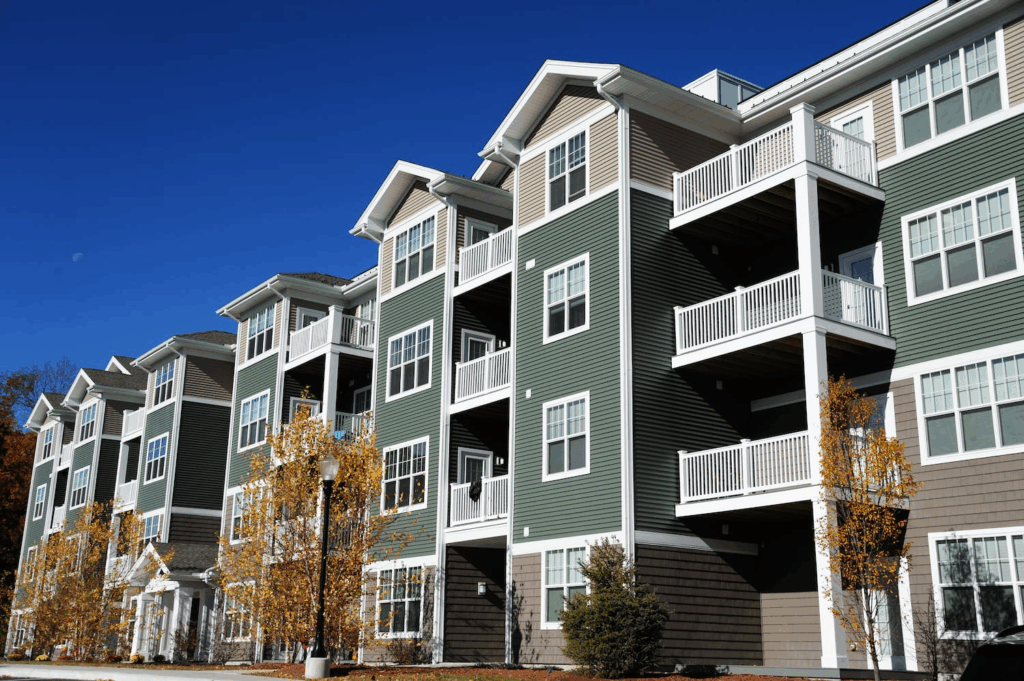
When we talk about the most crucial measurement for residential property valuation in the U.S., our focus invariably lands on Gross Living Area (GLA). This isn’t just a term; it’s the gold standard that appraisers, lenders, and increasingly, discerning buyers, rely upon.
What is GLA?
At its core, GLA represents the total finished, heated, and above-grade residential space within a dwelling. It’s the usable square footage that contributes most significantly to a home’s market value. Think of it as the area where you genuinely live and occupy daily.
Key Characteristics and Inclusions:
Above-Grade: This is paramount. GLA primarily includes space that is entirely or partially above ground level, with a minimum of 50% of its wall area above ground.
Finished Space: The area must be enclosed, heated (or cooled), and possess a level of finish comparable to the main living areas of the house. This includes bedrooms, bathrooms, kitchens, living rooms, dining rooms, family rooms, and finished utility rooms.
Direct Access: Typically, finished rooms must have direct access to each other or to a common hall.
Specific Exclusions: This is where many misconceptions arise. GLA never includes:
Garages: Attached or detached, they are separate functional spaces.
Unfinished Basements: Even if heated, if they lack the finish quality of the main living areas.
Below-Grade Areas: Spaces primarily below ground, even if finished. While finished basements add significant value, they are typically reported separately on an appraisal and not as part of GLA.
Open Decks, Patios, Porches: These are outdoor, unheated spaces.
Unfinished Attics or Bonus Rooms: Spaces that lack proper finishing, heating, or accessibility.
The ANSI Z765 Standard: A Beacon of Consistency
In the US, the gold standard for measuring residential properties, particularly for appraisers, is the ANSI Z765-2021 standard (Square Footage – Method for Calculating). This isn’t a federal law, but it’s widely adopted by the appraisal industry (including Fannie Mae, Freddie Mac, and FHA) to ensure consistency and prevent arbitrary calculations.
Under ANSI Z765:
Measurements are taken from the exterior perimeter of the house at each floor level.
Finished square footage that is below-grade (even if fully finished, heated, and accessible) is not included in GLA. It’s reported separately.
Ceiling heights typically need to be at least 7 feet, with some allowances for sloped ceilings.
Adherence to ANSI Z765 ensures that a 2,000 sq ft home in Arizona is comparable, in terms of its core living space, to a 2,000 sq ft home in New York, mitigating regional variations in measurement practices. This standardization is critical for fair market comparisons and accurate property valuations, impacting everything from listing accuracy to property tax square footage calculation.
Beyond GLA: Total Under Roof & Finished vs. Unfinished Space
While GLA is king for valuation, other measurements provide a more comprehensive picture of the physical structure and its potential.
Total Under Roof (TUR) / Total Square Footage:
This broader term encompasses all enclosed areas of a home, whether finished or unfinished, above or below grade. It includes:
GLA
Attached garages
Finished and unfinished basements
Unfinished attics
Enclosed sunrooms (even if unheated)
While TUR gives you a sense of the sheer physical footprint of the structure, it’s crucial not to confuse it with GLA when assessing value. A larger “total square footage” might include a massive unfinished basement or an oversized garage, which contributes differently to market value than an equivalent amount of finished, above-grade living space. Buyers often fall into the trap of comparing homes solely based on a high “total square footage” figure, leading to potential overpayment if the majority is unfinished or below-grade.
The Critical Distinction: Finished vs. Unfinished Space
This differentiation is particularly relevant when evaluating basements, attics, and bonus rooms.
Finished Space: Meets the GLA criteria (heated, accessible, comparable finish). A beautifully renovated basement with a family room, bedroom, and full bathroom adds significant value, though it will be reported separately from GLA. It commands a higher price per finished square foot.
Unfinished Space: Lacks one or more of the GLA criteria. An unfinished basement offers potential for expansion and storage but doesn’t contribute to GLA. While still valuable, its contribution to market price is lower than finished space.
Understanding this nuance is vital for sellers marketing their homes and for buyers assessing the true utility and calculating home value square footage. A “1,800 sq ft home with a 1,000 sq ft finished basement” is very different in value and functionality from a “2,800 sq ft home” where all space is above-grade GLA. Appraisers meticulously break this down, assigning different values to each category.
Beyond the Walls: Common Elements & Lot Size
The discussion of property dimensions wouldn’t be complete without considering the broader context, especially in multi-family dwellings or for standalone homes.
Common Elements (for Condos & HOAs):
For condominium owners, or those in homeowners’ associations (HOAs), the concept of “common elements” takes on significant importance. This is conceptually similar to the “Super Built-Up Area” in other markets but adapted for the US context.
What They Are: These are shared facilities and amenities accessible to all residents, but not part of their individual unit’s square footage. This includes:
Lobbies, hallways, stairwells, elevators
Shared recreational facilities (gyms, pools, clubhouses)
Gardens, courtyards, green spaces
Parking garages, visitor parking
Roof, building exterior, structural components
Impact on Value & Cost: While not contributing directly to your unit’s GLA, these common elements significantly enhance the lifestyle and appeal of the property. Their maintenance, however, comes with a cost – the HOA fees. These fees are your prorated share of maintaining all common elements.
Buying a Condo: When looking at a condo’s “square footage,” you’re almost always looking at the individual unit’s GLA (or a similar internal measurement). The value of the common elements is reflected in the overall market price and the HOA fees, not by adding a share to your unit’s published square footage. It’s crucial for buyers to scrutinize the HOA’s financial health and the condition of these common areas, as they directly impact enjoyment and resale value. This contributes to understanding condo common elements and their financial implications.
Lot Size / Land Area (for Single-Family Homes):
For single-family residences, the lot size impact on property value is monumental. This refers to the total area of the land parcel on which the house sits.
Measurements: Typically expressed in square feet or acres (1 acre = 43,560 sq ft).
Impact on Value: A larger or more desirable lot can significantly enhance a property’s value, sometimes more so than the house’s GLA. Considerations include:
Usability: Is the land flat, sloped, wooded? How much usable yard space is there?
Privacy & Aesthetics: Larger lots often offer more privacy and better views.
Expansion Potential: A larger lot might allow for future additions, a detached garage, or an accessory dwelling unit (ADU) – a major trend in 2025.
Location: The value of the land itself, independent of the structure, is often a major component of a property’s overall worth, especially in prime locations.
Why These Distinctions Matter: The 2025 Real Estate Landscape
In today’s fast-paced market, characterized by evolving buyer preferences and technological advancements, precision in property measurement is more critical than ever.
Appraisals and Lending (The Ultimate Gatekeeper): Appraisers are the arbiters of square footage. Their precise measurement and categorization of GLA, finished basements, and other areas directly dictate the property’s appraised value. This, in turn, impacts how much a lender is willing to finance. Incorrect or inconsistent measurements can lead to low appraisals, delaying or even derailing transactions. In 2025, with more sophisticated real estate appraisal standards and data analytics, accuracy is paramount.
Property Taxes: Local tax assessors use their own methodologies, often influenced by GLA and total finished square footage, to determine your annual property tax burden. An accurate understanding prevents overpayment or unexpected increases.
Buyer Expectations & Transparency: The modern buyer is savvier. With virtual tours, AI-driven home search tools, and increased access to data, they expect transparency. Misleading square footage claims, whether intentional or not, erode trust and can lead to legal issues. Accurate home square footage is a foundational pillar of trust.
Seller Strategies: Marketing Your Asset: For sellers, accurately representing your home’s dimensions is crucial for effective marketing. Highlighting GLA correctly, while also detailing valuable finished basement space, allows you to properly position your home and justify your asking price. Overstating GLA can lead to inflated “price per square foot” figures that don’t hold up under appraisal.
Technology’s Role in 2025: Laser measuring devices, 3D scanning, drone mapping, and sophisticated CAD software are making measurements more precise than ever. AI tools are assisting appraisers in cross-referencing data. As a seller, leveraging professional measurement services can ensure your listing information is impeccably accurate. As a buyer, these technologies offer an unprecedented ability to virtually “walk” through a space and verify dimensions.
Real-World Scenario: The 2025 Dilemma
Let’s consider two homes in a desirable suburban market, both listed as having “2,500 total square feet” at $750,000.
Home A: Boasts 2,000 sq ft of above-grade GLA with a 500 sq ft finished basement. The basement includes a media room and a half bath. It was finished to a high standard, but the appraiser will report its value separately from the GLA. The effective price per finished square foot for the GLA is $375, and the finished basement adds incremental value.
Home B: Features 1,500 sq ft of above-grade GLA, a 500 sq ft attached garage, and a 500 sq ft unfinished basement. The seller, in good faith, combined all these areas to reach “2,500 total square feet.” Here, the effective price per GLA square foot is $500, and the remaining 1,000 sq ft (garage + unfinished basement) contribute significantly less to the appraised value.
A buyer looking only at “2,500 total square feet” might perceive these homes as comparable. However, an expert would immediately recognize that Home A offers 500 more square feet of actual living space (GLA + finished basement) and a much lower GLA price per square foot, likely representing better value, even if the “total” numbers look similar. This highlights the importance of property measurement guidelines USA and careful inspection.
Navigating the Market: Expert Tips for 2025 Buyers & Sellers
As we move further into 2025, these insights are your competitive edge.
For Buyers:
Always Ask for GLA: When reviewing listings, always seek clarification on the Gross Living Area. Don’t rely solely on “total square footage” or “total finished area” without understanding what’s included.
Review Appraisals Diligently: Your lender will order an appraisal. Review it carefully, paying close attention to how the appraiser has calculated and categorized the square footage (GLA, finished basement, garage, etc.). This is your ultimate safeguard.
Understand Finished vs. Unfinished: Evaluate how much of the reported square footage is genuinely finished and usable living space versus unfinished areas like basements or garages. Factor in the cost and effort to finish any undeveloped space.
Scrutinize Condo Documents: For HOAs, dive deep into the HOA documents to understand common elements, amenities, and their impact on fees and your lifestyle. Don’t underestimate the understanding condo common elements clause.
Consider Lot Usability: For single-family homes, walk the entire lot. Is it usable? Does it offer privacy? Is there potential for future expansion?
For Sellers:
Measure Accurately, or Hire a Professional: To ensure your listing is impeccable, consider hiring an appraiser or a professional measurer (especially one familiar with ANSI Z765) before listing. This provides an undisputed figure for your GLA.
Highlight GLA Clearly: In your marketing materials, prominently feature your home’s GLA. This is your primary value driver.
Be Transparent About Other Areas: Clearly articulate what constitutes finished basements, attached garages, or other beneficial but non-GLA spaces. For example, “1,800 sq ft GLA with an additional 600 sq ft professionally finished basement.” This manages expectations and prevents disappointment during appraisal.
Understand Appraiser Methodology: Be prepared for how an appraiser will calculate your home’s value. Knowing the rules of the game helps you price and market your property effectively.
Leverage Technology: Utilize high-quality photography and virtual tours to showcase the functionality and finish of all areas, including finished basements or bonus rooms, even if they don’t count towards GLA.
The Final Word
The measurement of real estate isn’t just about square feet; it’s about understanding value, utility, and investment potential. In the sophisticated 2025 market, relying on vague “total square footage” figures is a recipe for missed opportunities or costly mistakes. By grasping the nuances of Gross Living Area, the distinction between finished and unfinished space, and the role of common elements and lot size, you arm yourself with the knowledge to make superior decisions, whether buying your dream home or strategically positioning your property for sale.
Don’t leave your most significant investment to chance. Arm yourself with precise knowledge. For personalized guidance on understanding your property’s true dimensions and maximizing its value in today’s complex market, connect with a local real estate expert who can help you measure up to success.