
The Enduring Power of the Ballot: Reaffirming Women’s Suffrage in 21st-Century America
In the ever-evolving landscape of American politics, fundamental tenets of democracy occasionally face renewed scrutiny, sometimes in ways that challenge the very fabric of established rights. As we navigate 2025, a recent surge of public discourse has brought the long-settled issue of women’s suffrage back into the spotlight, following controversial remarks by certain public figures. These voices, often amplified through digital platforms, have contended that the 19th Amendment, which granted women the right to vote, has had detrimental effects on the nation, advocating for a return to a “household vote” where men make final electoral decisions. This perspective, while niche, necessitates a thorough analytical examination, not only to understand the arguments put forth but, more critically, to reaffirm the indispensable role of universal suffrage in a robust, inclusive democracy.

A Historical Imperative: The Genesis of Women’s Suffrage
To comprehend the significance of the 19th Amendment, one must first appreciate the arduous struggle that led to its ratification. For over a century before its passage in 1920, pioneering women and their male allies waged a relentless campaign for voter rights protection and equal civic participation. The pre-suffrage era was characterized by a societal structure where women, despite contributing significantly to family, community, and economy, were largely excluded from formal political processes. They were denied property rights, educational opportunities, and, crucially, the right to cast a ballot, effectively rendering them second-class citizens in the democratic experiment.
The suffrage movement, spearheaded by luminaries like Susan B. Anthony, Elizabeth Cady Stanton, and Alice Paul, was a testament to persistent advocacy. These activists endured societal ridicule, legal challenges, and even imprisonment for their unwavering belief in the principle that democracy and civic participation must extend to all citizens, regardless of gender. Their arguments were not merely about personal empowerment; they asserted that a government deriving its just powers from the consent of the governed could not legitimately exclude half its population from expressing that consent. They highlighted the hypocrisy of fighting for democracy abroad while denying it at home.
The passage of the 19th Amendment was a landmark achievement, a pivotal moment that redefined American citizenship and expanded the nation’s democratic promise. It enshrined in the Constitution the right of women to vote, unequivocally declaring that “The right of citizens of the United States to vote shall not be denied or abridged by the United States or by any State on account of sex.” This amendment was not merely a legalistic change; it represented a profound philosophical shift, recognizing women as autonomous individuals with their own political agency and capacity to contribute to national governance. Its impact was immediate and long-lasting, setting a precedent for future expansions of voting rights and strengthening the very foundations of American constitutional amendments.
Deconstructing the Modern Critique: Claims vs. Reality
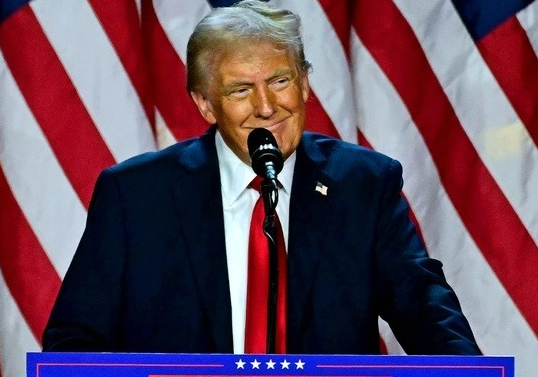
Recent arguments challenging the 19th Amendment often hinge on a set of specific claims: that women’s votes are disproportionately responsible for what some perceive as “moral atrocities,” progressive policies, and the election of certain political figures. These claims typically link female suffrage to outcomes such as the legalization of abortion, societal acceptance of diverse sexual orientations, increased immigration, and the expansion of the welfare state. Furthermore, they often assert that women are inherently emotional decision-makers, thus unfit for the rational demands of political choice, advocating for a return to a “household vote” where men would ostensibly make more “prudent” decisions on behalf of their families.
An analytical approach to these claims reveals several critical flaws. Firstly, attributing complex socio-political phenomena like abortion rights or immigration policies solely to the “female vote” is a vast oversimplification. Major societal shifts and legislative changes are the products of intricate political processes, involving diverse coalitions of voters, legislative bodies, judicial decisions, and shifting cultural norms, influencing public opinion over decades. While voting demographics analysis clearly indicates differences in voting patterns between genders, these patterns are nuanced and influenced by a myriad of factors including age, race, economic status, education, geographic location, and religious affiliation. To isolate gender as the sole determinant of political outcomes ignores the multifaceted reality of electoral behavior.
Secondly, the proposition of a “household vote” represents a profound regression from established democratic principles. This concept, rooted in historical patriarchal structures, would effectively disenfranchise individual women, reducing their political identity to that of their male relatives. Such a system directly contradicts the core tenet of individual liberty and equal representation that underpins modern American political landscape and global democratic standards. It would Strip women of their individual civic participation and autonomy, diminishing their voice in matters that directly affect their lives and communities. This is not merely a matter of political preference but a fundamental challenge to the concept of universal human rights and equal citizenship.
Thirdly, the argument that women are inherently more emotional and therefore less capable of rational political judgment perpetuates an outdated and sexist stereotype. Scientific research in psychology and neuroscience has consistently debunked the notion that emotionality is a gender-exclusive trait or that it inherently disqualifies individuals from making sound decisions. Emotions play a role in all human decision-making, influencing how individuals process information and weigh values. Moreover, empathy, often associated with emotional intelligence, can be a crucial asset in political leadership and policy-making, fostering inclusive and compassionate governance. Reducing women to their emotions in the political sphere undermines their intellectual capabilities and diverse perspectives, hindering the richness of gender equality in politics.
The Impact of Women Voters in Contemporary America (2025 Perspective)
The reality of women’s impact on policy-making and electoral outcomes in 2025 is undeniable and overwhelmingly positive. Women voters constitute a formidable and increasingly influential bloc, consistently turning out at high rates and shaping election results across local, state, and national levels. Their diverse perspectives on issues ranging from healthcare, education, and economic justice to environmental protection and national security are vital for comprehensive policy formulation.
Consider the recent election integrity discussions and their focus on ensuring broad voter rights protection. Any proposal to restrict the suffrage of a significant demographic group would not only be a historical anomaly but would also critically undermine faith in democratic institutions. Women’s voices contribute to a more representative government that is better equipped to address the complex challenges facing the nation. Their participation brings different priorities and experiences to the political table, enriching debates and leading to more equitable and effective solutions. The increasing number of women holding elected office—from local councils to state legislatures and the U.S. Congress—further demonstrates their capacity for leadership and their crucial contributions to governance. This upward trend in representation is a direct result of their right to vote and their active engagement in the political process.
Furthermore, the argument that women vote “liberal” is simplistic. While aggregated data often shows a gender gap in voting patterns, with women, particularly younger women and women of color, tending to favor Democratic candidates, this is not a monolithic reality. Millions of women across the country identify as conservative, libertarian, or independent, and their votes are cast based on their unique values, priorities, and assessments of candidates and issues. The diversity of political thought among women is a strength, reflecting the heterogeneity of American society itself. Restricting their right to vote would silence not just one viewpoint, but a vast spectrum of informed opinions, undermining the very pluralism essential for a vibrant democracy.
The Indispensable Role of Universal Suffrage
The foundation of American democracy rests on the principle of universal suffrage. The right to vote is not a privilege to be granted or revoked based on perceived electoral outcomes or gender stereotypes; it is a fundamental right of citizenship. Any attempt to disenfranchise a segment of the population, whether based on gender, race, religion, or socioeconomic status, represents a direct assault on the democratic ideal itself.
The historical trajectory of American constitutional amendments has been one of expansion, not contraction, of voting rights. From the abolition of property qualifications to the enfranchisement of African Americans and, subsequently, women, the nation has progressively moved towards a more inclusive definition of its electorate. To reverse this progress would not only be unconstitutional but also deeply antithetical to the values of equality, liberty, and justice that the United States purports to uphold.
In a healthy democracy, diverse viewpoints are not just tolerated but encouraged. Disagreement on policy matters is a sign of a robust public sphere. However, calls to deny fundamental rights based on the outcome of elections transcend mere policy disagreements. They venture into the dangerous territory of undermining the legitimate expression of the popular will and questioning the very legitimacy of certain citizens’ political existence.
As we look ahead, protecting the right to vote for all Americans remains a paramount concern. This includes robust defenses against voter suppression, ensuring accessible elections, and fostering comprehensive civic education resources that inform citizens about their rights and responsibilities. The 19th Amendment is not a historical relic; it is a living, breathing part of our constitutional framework, a testament to struggles past and a guarantor of future equity.
Conclusion: Upholding Democratic Integrity
The current discussions, however controversial, serve as a stark reminder of the continuous vigilance required to safeguard democratic principles. The notion that women’s suffrage is a “moral and political tragedy” is a dangerous historical revisionism that disregards the immense progress made in ensuring a more representative and just society. The history of suffrage movements teaches us that the expansion of the ballot has always strengthened, not weakened, the nation.
In 2025, the conversation must center not on rolling back fundamental rights but on how best to strengthen democratic institutions and ensure that every eligible citizen can exercise their right to vote freely and fairly. The impact of women voters is a positive and essential force in shaping the nation’s future, bringing diverse perspectives, and driving progress on critical issues. The 19th Amendment stands as a bedrock of American liberty and equality, a testament to the fact that the voices of all citizens, regardless of gender, are not only valuable but indispensable to the ongoing success of our democratic experiment. To suggest otherwise is to reject the very ideals that define a free and equitable society.