
A decade of advising residential buyers has taught me that the most Important question rarely concerns square footage or interest rates.
It is a simpler one: do you want a private house with land of your own, or a unit inside a building where many conveniences are shared? Families, young professionals, and veteran investors all arrive at it eventually. The answer outweighs the price tag, because it determines how your mornings run, how your wealth builds over time, and how comfortable you feel when you walk through the front door.
A crowded market rewards a clear plan. Four measures make the comparison between villas and apartments workable: budget, location, space, and amenities. Work through them in order, and you should be able to commit your money with confidence.
Start with the budget, since every purchase rests on financial planning. A listing price captures only a slice of the real expense. The better yardstick is the total cost of ownership, which includes property taxes, maintenance duties, and the appreciation you can anticipate when you eventually sell.
A villa usually demands more cash at the outset, because the buyer receives both the structure and the title to the land beneath it. Land tends to climb in value faster than the buildings standing on it, and that explains why villas have historically delivered strong long-term capital growth. Yet the running budget has to absorb a series of heavy items: property insurance, roof replacement, exterior painting, landscape upkeep, and security systems. These costs vary from one year to the next, and the owner both oversees and pays for each of them.
An apartment offers a softer entry. A buyer can claim a place in a prime urban area, where appreciation is strong, without a massive initial outlay. In exchange, a monthly or quarterly maintenance fee comes due permanently. At least those charges are predictable, and they cover a broad range of shared services that residents would otherwise buy on their own. A villa gains value chiefly as land prices rise, whereas an apartment leans on strong rental yields and steady demand for city housing. In short, a villa pairs a higher purchase price with variable upkeep costs, and an apartment pairs a lower purchase price with predictable association dues.
Location is often called the golden rule of real estate investment, and these two property types sit in very different parts of a metropolitan area.
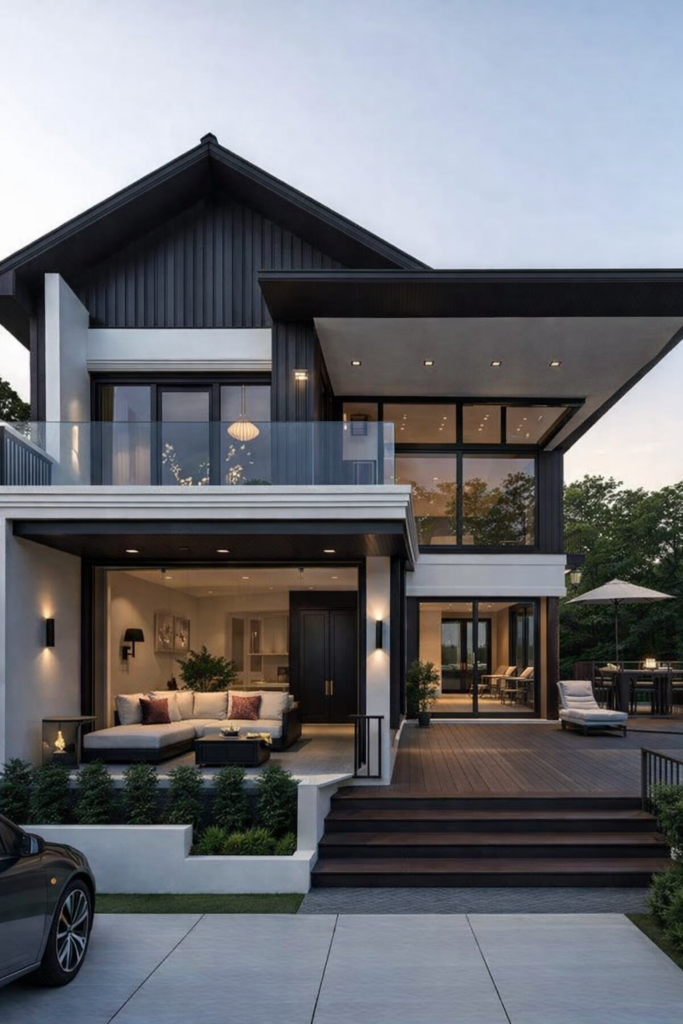
Villas are found mostly along suburban or peri-urban corridors, where land is easier to acquire and cheaper. That setting brings quieter surroundings, lower ambient noise, cleaner air, and large gated communities built for calm family living. Distance is what that peace costs. Residents typically face a longer daily commute to central business districts, commercial hubs, and entertainment areas. The typical villa neighborhood lies on the suburban fringe or the outskirts of a gated community, and it is quiet, low in density, and private.
Apartments, by design, occupy prime urban ground. Developers situate high-rise towers and mid-rise complexes near transit hubs, financial districts, leading educational institutions, and healthcare centers. Living in one can shorten a commute dramatically, and cafes, restaurants, and cultural landmarks may be a short walk away. The sacrifice is the quiet solitude of a suburban villa enclave. Apartment neighborhoods sit in urban centers, along transit corridors, and in downtown cores, and they feel lively, dense, and energetic. Their defining strength is proximity to work, dining, and retail.
Space comes third, because the dynamics of a home’s rooms set the baseline for daily comfort. Over ten years I have watched architectural trends change considerably, yet buyers still want what they always have wanted: functionality paired with visual appeal.
Villas are known for large footprints, multi-story layouts, and complete privacy. They suit buyers who want room to breathe, interiors shaped to their own taste, and private outdoor land. Imagine open-air gatherings in the backyard, a private garden, or a custom home gym with no structural limits. A villa provides the physical canvas for all of it. Its interiors are expansive, multi-level floor plans with high ceilings. Outdoor access means private yards, terraces, and dedicated land titles. A villa also scales well, since the owner has high potential for structural expansion or remodeling.
Contemporary apartments are masterworks of efficient design. Modern multi-family developments stretch every square foot through smart floor plans, cutting wasted corridors and making the most of natural light. For individuals and couples who want a streamlined, low-maintenance routine without losing central access, an apartment is a compact and highly functional choice. Interiors are optimized, single-level, open-concept configurations. Outdoor access comes through shared balconies, community decks, or rooftop lounges. The footprint is fixed and limited by building bylaws, so room for expansion is small.
The fourth factor is amenities, which strongly influence daily quality of life and the long-term valuation of a property. Here the contest is between absolute exclusivity and the cost efficiency of shared community infrastructure.

A villa gives its owner a level of personal luxury that no shared building can match. Every amenity is yours alone. A private swimming pool, a secluded lawn, and a custom garage can all be used without scheduling conflicts or community rules. Because ownership is absolute, the owner also carries 100% of the maintenance, cleaning, and repair costs for those features. Recreation takes the form of private pools, personal gardens, and custom patios. The financial burden is high ongoing capital expenditure, and the owner alone manages and funds the upkeep.
Apartments take a communal approach, and it resonates with many modern city dwellers. When hundreds of co-owners pool their resources, a residential complex can offer high-end facilities that would be cost-prohibitive for any single household to build and maintain. Examples include Olympic-sized swimming pools, fully equipped fitness centers, rooftop lounges, and 24/7 security. Community association management also takes care of upkeep on these shared spaces, which frees residents’ weekends for leisure instead of property maintenance. In practice, recreation means shared fitness centers, community halls, and security systems. The association handles maintenance through homeowners association and maintenance fees, and operating costs are divided among many units.
Once all four areas are covered, the last step is matching the property to your life. Deciding between a villa and an apartment requires an honest look at your current stage of life, your family structure, the demands of your career, and your long-term goals.
A handful of pointed questions can sharpen that assessment. Do you want a spacious sanctuary with full architectural freedom, or would you rather live a lock-and-leave lifestyle that keeps chores to a minimum? Would you accept a longer daily commute in return for quiet suburban luxury, or does urban convenience come first? Anchor the decision in the habits you actually have, not in an idealized version of your life. That approach protects your investment and supports lasting satisfaction with your home.
Neither property type wins outright. The right choice depends on your own priorities, your financial strategy, and the lifestyle you envision. Whether you lean toward the independent elegance of a private villa or the efficient, connected convenience of a modern apartment, a firm grasp of space, amenities, location, and budget puts you in a strong position to buy. So which version of daily life suits you better: the quiet space of a villa, or the connected pace of an apartment?
If this breakdown helped you think through your next move, subscribe to the channel so more guides like this one reach you. Hit the like button if you found it useful, and turn on the notification bell so the latest updates never slip past you.”