
The Tangible Trap: Why Direct Real Estate Investment Might Be Holding Your Wealth Back
For decades, the allure of owning physical property has been deeply ingrained in the American dream. We’re bombarded with images of sprawling estates, charming bungalows, and the sense of security that comes with a tangible asset. But as a seasoned investor with a decade navigating the complex currents of financial markets, I’ve witnessed firsthand how this sentimental attachment can blind individuals to the superior wealth-building potential offered by more liquid and diversified investment vehicles. While the idea of “touching and feeling” your investment is appealing, it often masks significant drawbacks that can turn a dream into a financial drag.

This isn’t about dismissing real estate entirely; it’s about critically examining its role in a balanced portfolio and understanding why, for many, directly owning property as an investment can be a suboptimal choice compared to alternatives like Real Estate Investment Trusts (REITs) and broadly diversified stock portfolios. Let’s dive into the concrete reasons why the tangible trap of direct real estate ownership might be a costly myth for aspiring wealth accumulators, especially when contrasted with the modern landscape of accessible, efficient investing.
The Mammoth Entry Fee: Capital Demands in Direct Real Estate
The most immediate hurdle for anyone considering direct real estate investment is the sheer amount of capital required. We’re not talking about a few hundred dollars; we’re discussing tens, if not hundreds, of thousands of dollars just to get your foot in the door. Consider the average down payment for a home in many U.S. markets – often 20% of a significant price tag. This means for a property valued at $400,000, you’re looking at an immediate $80,000 cash outlay. For many individuals, even those with stable incomes, accumulating such a sum can take years of diligent saving, during which their capital sits idle, earning negligible returns in a low-interest savings account.
Compare this to the world of stocks and ETFs. With platforms offering fractional shares, you can begin building a diversified portfolio for as little as a dollar. Imagine wanting to own a piece of Apple (AAPL) – no need to save up for a full share. You can buy 0.1 share today, another 0.2 next month, and so on, gradually accumulating ownership while your capital is actively working for you. This accessibility democratizes investing, allowing individuals to participate in market growth from day one, rather than waiting years to overcome a prohibitive initial capital requirement. This immediate access to investment capital is a critical differentiator, enabling earlier compounding of returns.
The Avalanche of Closing Costs: More Than Just the Sticker Price
Beyond the down payment, the transactional friction in real estate is substantial. Closing costs can easily add another 5-10% to the purchase price. These aren’t trivial fees; they include a complex web of expenses such as loan origination fees, appraisal fees, title insurance, legal fees, recording fees, and potentially points paid to the lender. For a $400,000 property, this could mean an additional $20,000 to $40,000 in upfront expenses. These costs are essentially sunk capital, offering no return on investment themselves, but rather facilitating the transaction.
In stark contrast, investing in publicly traded securities like stocks and ETFs typically involves transaction fees measured in fractions of a percent, often waived entirely by many modern brokerages. A 0.25% transaction fee on a $1,000 stock purchase is a mere $2.50. This dramatic difference means a much larger portion of your invested capital goes to work immediately, fostering faster growth and reducing the initial drag on your returns.
The Labyrinthine Transaction Process: Time is Money, Especially in Real Estate
The act of buying or selling property is notoriously time-consuming and complex. In many U.S. markets, navigating the process from offer to closing can take anywhere from 30 to 90 days, sometimes longer. This extended timeline involves multiple parties – buyers, sellers, agents, lenders, appraisers, inspectors, title companies, and attorneys – each with their own schedules and potential for delays. During this protracted period, market conditions can shift, interest rates can fluctuate, and unforeseen issues can arise, jeopardizing the entire deal.
Consider the implications of an urgent need for cash. If you suddenly require funds and your primary asset is a house, you’re looking at a lengthy and potentially discounted sale to access liquidity. In the stock market, however, transactions are executed in seconds. You can buy or sell shares on major exchanges like the NYSE or Nasdaq with remarkable speed and efficiency, providing unparalleled flexibility in managing your capital. This immediacy is a significant advantage in today’s fast-paced financial environment.
The Tyranny of Single-Asset Risk: Diversification Woes in Real Estate
The golden rule of investing is diversification – “Don’t put all your eggs in one basket.” This principle is exceptionally difficult and expensive to implement with direct real estate ownership. To achieve meaningful diversification, you would need to own multiple properties across different geographic locations, property types (residential, commercial, industrial), and investment strategies (renting, flipping). The capital required for even two or three such properties would be astronomical, let alone the ten or twenty needed for robust diversification.
Furthermore, managing a diverse portfolio of physical properties is a significant undertaking, demanding substantial time, expertise, and ongoing expenses for maintenance, repairs, and tenant management.
Contrast this with the stock market. Through fractional shares and Exchange Traded Funds (ETFs), diversification is readily achievable. A single S&P 500 ETF, for instance, offers exposure to the 500 largest U.S. companies across various sectors for a fraction of the cost of owning even one individual stock. You can construct a highly diversified portfolio with a few thousand dollars, spreading your risk across hundreds or even thousands of individual assets without the burden of direct management. This ease of diversification is paramount for long-term wealth preservation and growth.
The Widening Return Gap: Stocks Consistently Outpace Real Estate
When we look at historical data, the performance of stocks generally outshines that of direct real estate investment over the long term. For instance, over the past several decades in the U.S., the S&P 500 has consistently delivered average annual total returns in the range of 10-12%, encompassing both capital appreciation and dividends. Residential and commercial real estate, while offering steady income, have historically yielded lower average annual returns, often in the 4-7% range, before factoring in the significant costs associated with ownership and management.
It’s crucial to consider net returns. When you subtract the high transaction costs, ongoing maintenance, property taxes, insurance, and potential management fees from real estate returns, the gap between stocks and property widens considerably. While real estate offers a tangible asset, its financial performance, when analyzed objectively, often falls short of the growth potential inherent in a well-diversified stock portfolio.
The Illiquidity Shadow: When Cash is King and Real Estate is a King’s Ransom
Liquidity – the ease and speed with which an asset can be converted into cash without significantly impacting its price – is a critical factor for any investor. Real estate is notoriously illiquid. As discussed, selling a property can take months, and if you need cash urgently, you may be forced to accept a substantially discounted offer to facilitate a quick sale. This lack of liquidity can be a significant liability, especially during unexpected financial emergencies or when opportunities arise to redeploy capital into more promising investments.
Stock markets, on the other hand, are highly liquid. Major exchanges facilitate the buying and selling of shares in seconds, providing investors with the flexibility to react to market movements, rebalance their portfolios, or access their capital when needed. While some niche stock markets or smaller companies can exhibit lower liquidity, the vast majority of publicly traded securities offer immediate access to cash.
The Opaque Pricing Puzzle: Real Estate’s Price Discovery Deficit
Price discovery – the process by which buyers and sellers determine an asset’s fair market value – is significantly more efficient in liquid, transparent markets like the stock exchanges. In the stock market, real-time pricing data is readily available, and frequent transactions help to establish a consensus on fair value, aligning market prices closely with intrinsic value.
Real estate markets, being largely private and less frequent in their transactions, suffer from a lack of transparency. Determining the “fair” price of a property can be subjective, relying heavily on local market conditions, comparable sales (which may not be perfectly analogous), and the negotiation prowess of the parties involved. This opacity can lead to price distortions, where properties may be overvalued or undervalued due to information asymmetry or limited transaction volume. This lack of clear price discovery makes it harder to assess true investment value and can lead to poor buying or selling decisions.
The Burden of Active Management: Real Estate Demands Your Time and Energy
Direct real estate investment, particularly rental properties, requires significant active management. This isn’t a passive income stream; it’s a business. You’ll be responsible for marketing the property, screening and managing tenants, collecting rent, handling repairs and maintenance, dealing with legal issues, and managing finances. This demands a considerable time commitment and can be emotionally taxing.
While outsourcing to a property manager is an option, it incurs additional costs, typically 8-12% of the monthly rent, further eroding your net returns. Even with a manager, you remain ultimately responsible. In contrast, owning stocks offers a far more passive experience. Dividend income, for example, is typically automatically deposited into your brokerage account, with options to reinvest or withdraw it with minimal effort. The “do-nothing” aspect of passive income from stocks is a significant advantage for busy individuals.
Leverage: A Double-Edged Sword That Can Severely Wound
Leverage, the use of borrowed funds to amplify potential returns, is often touted as a primary benefit of real estate investing. While it’s true that leverage can magnify gains, it equally magnifies losses. If you purchase a property with 80% leverage and its value declines by 20%, you can wipe out your entire equity, effectively losing 100% of your invested capital.
This amplification of downside risk is particularly concerning. Moreover, the cost of leverage – mortgage interest payments – adds a significant ongoing expense that reduces your overall return. The risk of foreclosure looms large if you can no longer meet your mortgage obligations, exacerbated by the illiquidity of real estate, which makes it difficult to sell quickly enough to cover outstanding debts. While margin trading exists in stocks, it’s typically an optional tool for more sophisticated investors, and with fractional investing, it’s often unnecessary for building a diversified portfolio.
The Unseen Currents: External Risks in Real Estate Investment
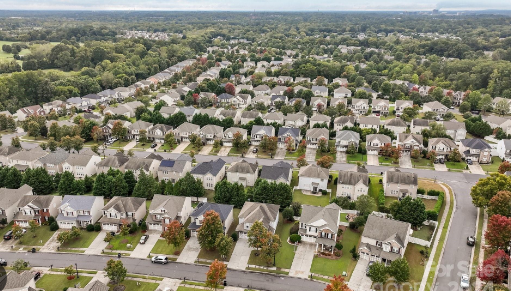
Real estate investments are susceptible to a host of external risks that are difficult to control or predict. Location-specific risks, such as demographic shifts, changes in local infrastructure, or increased crime rates, can negatively impact property values. Regulatory risks, including new zoning laws, rent control measures, or environmental regulations, can impose unexpected costs or limit income potential. Environmental risks, from natural disasters to climate change impacts, can render properties uninhabitable or undesirable. Finally, broad economic downturns can lead to job losses, reduced rental demand, and declining property values.
While these risks also affect businesses and their stock prices, a well-diversified stock portfolio allows investors to spread their exposure across numerous companies and industries, mitigating the impact of any single external shock. For a direct real estate investor, a single adverse event in their property’s location can have a devastating impact on their entire investment.
The Smarter Path: Embracing the Efficiency of REITs
The arguments against direct real estate investment aren’t a call to abandon the real estate sector altogether. Instead, they highlight the need for a more intelligent approach to gaining exposure. This is precisely where Real Estate Investment Trusts (REITs) shine.
REITs are companies that own, operate, or finance income-generating real estate. They trade on major stock exchanges, mirroring the accessibility, liquidity, and transparency of stocks. Investing in REITs allows you to participate in the real estate market without the burdens of direct ownership.
How REITs Bridge the Gap:
Low Entry Barrier: Just like stocks, you can buy fractional shares of REITs, making real estate investment accessible with minimal capital.
Effortless Diversification: You can invest in multiple REITs or REIT ETFs, gaining exposure to a wide array of properties and geographic locations with a single transaction.
Liquidity and Transparency: REITs are traded on public exchanges, offering real-time pricing and immediate liquidity.
Passive Income: REITs are legally required to distribute a significant portion of their taxable income to shareholders as dividends, providing a consistent income stream with no active management required from the investor.
Professional Management: REITs are managed by experienced professionals who handle property acquisition, development, and management, freeing you from the day-to-day hassles.
Historical Performance: Over various timeframes, REITs have demonstrated competitive returns compared to direct real estate, often with superior risk-adjusted profiles.
Your Next Move Towards Smarter Investing
The allure of tangible assets is powerful, but in today’s sophisticated financial landscape, it’s essential to look beyond sentiment and embrace strategies that offer superior potential for growth, liquidity, and diversification. While direct real estate investment has its place for a select few with substantial capital and tolerance for its inherent complexities, for the majority of investors, more accessible and efficient avenues exist.
If you’re ready to move beyond the tangible trap and build a more robust, diversified, and potentially higher-returning portfolio, exploring options like stocks, ETFs, and REITs is a logical next step. Platforms like Sarwa are designed to make this transition seamless, offering access to a wide range of investment opportunities with low minimums, transparent fees, and user-friendly interfaces. Don’t let the dream of a physical asset overshadow the reality of building lasting wealth.
Begin your journey towards smarter investing today. Explore how you can leverage the power of modern financial markets to achieve your long-term financial goals.