
Navigating 2026: The Enduring Appeal of Swiss Real Estate Amidst Global Turbulence
As a seasoned professional with a decade immersed in the dynamic world of real estate investment, particularly within the DACH region, I’ve witnessed firsthand the cyclical nature of markets. However, the landscape of 2025 and the trajectory leading into 2026 present a unique confluence of challenges and opportunities. This period, characterized by persistent economic policy uncertainty and escalating geopolitical tensions, has undeniably cast a shadow over global financial markets. Yet, within this tempest, the Swiss real estate market has emerged not just as a haven, but as a remarkably stable anchor, demonstrating exceptional resilience and continued strong demand.

The economic narrative of 2025 was largely defined by an unpredictable policy environment. The ripple effects of international trade disputes, particularly U.S. import tariffs, significantly impacted export-dependent economies like Switzerland. As we transitioned into 2026, the global stage became dominated by heightened geopolitical risks. The protracted conflict in the Middle East injected extreme volatility into commodity markets and amplified concerns of stagflation – a scenario where economic growth stagnates while inflation surges. Europe, with its intricate supply chains and reliance on global trade, has felt these effects acutely, tempering the anticipated economic recovery.
Against this backdrop of global headwinds, Switzerland has showcased a remarkable degree of resilience. Several intrinsic factors contribute to this robustness. Firstly, the relatively lower proportion of energy costs within the Swiss consumer basket acts as a buffer against energy price shocks. Secondly, a well-regulated electricity pricing mechanism provides a degree of predictability, shielding households and businesses from the wild swings seen elsewhere. Crucially, the enduring strength of the Swiss franc, while posing challenges for Swiss exporters by making their goods more expensive internationally, simultaneously reinforces its status as a quintessential safe-haven currency. This inherent stability attracts capital, not only to traditional financial assets but also, and perhaps more importantly for long-term wealth preservation, to Swiss property investment. In our baseline projections, Swiss GDP growth is forecasted at a respectable 1.1% for 2026, with inflation anticipated to settle around 0.5%, a figure slightly higher than initially predicted but still remarkably contained compared to global trends.
Stable Values: A Beacon in Turbulent Times for Swiss Real Estate
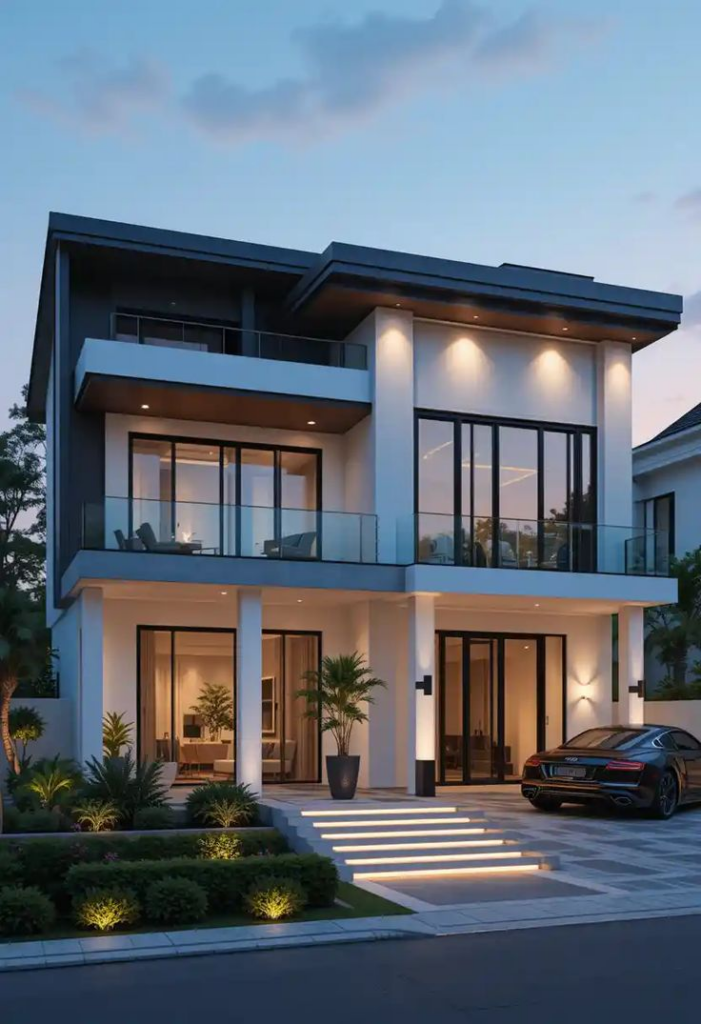
The Swiss real estate market in 2025 was a spectacle of robust activity. Capital markets witnessed record transaction volumes, with a particular surge in demand for residential property funds. This elevated investor appetite translated into rising premiums, signaling a strong preference for tangible assets offering perceived security. The defensive segments of the market, those traditionally less susceptible to economic downturns, experienced further yield compression. This phenomenon, a direct consequence of intense demand for stable, reliably leased properties within a persistently low-interest-rate environment, underscored the market’s search for dependable income streams. Looking ahead to 2026, this robust demand for Swiss real estate investment opportunities is not only expected to persist but to solidify. Investors are increasingly recognizing the inherent qualities of Swiss property: its capacity to offer inflation-protected, predictable rental income, and its crucial role in providing vital diversification benefits, thereby acting as a stabilizing force amidst pervasive uncertainty. This makes buying property in Switzerland an attractive proposition for both domestic and international investors seeking long-term value.
The Scarce Commodity: Urban Residential Space in Switzerland
The structural underpinnings of Switzerland’s residential market remain exceptionally strong, driven by enduring demographic and societal trends. While net immigration in 2025 may have moderated slightly from the record-breaking levels seen in prior years, it comfortably remains above the long-term average. This sustained inflow of new residents, coupled with evolving lifestyle preferences such as increased individualization, an aging population demanding specialized housing, and the inexorable march of urbanization, collectively fuels a consistent and growing demand for residential units. This demand is most pronounced in Switzerland’s vibrant cities and burgeoning urban agglomerations, where the supply of new housing is inherently limited. Consequently, vacancy rates have continued their downward trajectory across nearly all regions, pushing rents steadily upward. Furthermore, with the anticipated uptick in long-term interest rates, particularly in the latter half of 2026, we foresee a corresponding upward adjustment in the mortgage reference rate. This will inevitably influence borrowing costs for prospective buyers and may further temper new development, reinforcing the scarcity of desirable residential stock and supporting Swiss property values.
Global Challenges, Swiss Resilience: A Commercial Real Estate Perspective
Over the past decade, the global commercial real estate landscape has been a battlefield of significant structural shifts. The accelerating prevalence of remote and hybrid working models has irrevocably altered the demand for traditional office spaces. Simultaneously, the relentless growth of e-commerce continues to exert considerable pressure on conventional retail real estate. Conversely, the logistics and industrial sectors have emerged as significant beneficiaries of these transformative trends, witnessing unprecedented demand for warehousing and distribution facilities. These structural changes are further compounded by a subdued global economic momentum that has lingered since the disruptive onset of the COVID-19 pandemic.
However, when viewed through an international lens and assessed within a historical context, Switzerland’s commercial real estate markets demonstrate a remarkable degree of resilience. The same population growth that bolsters the residential sector also translates into a stronger labor market and increased consumer spending, providing a vital tailwind for the commercial real estate sector. This symbiotic relationship between population growth and economic activity creates a more stable operating environment for businesses, thereby supporting demand for commercial spaces. For investors eyeing commercial property investment Switzerland, this underlying economic strength is a critical factor.
Outlook 2026: A Stable Anchor in a Volatile Financial Environment
Despite the upward pressure on long-term interest rates, driven by geopolitical uncertainties and general market volatility, we maintain a positive outlook for Swiss real estate capital growth in 2026. While the pace of appreciation is expected to moderate compared to the exceptional performance of the preceding year, the fundamental strength of the market, particularly within the residential segment, remains exceptionally robust.
Residential assets are projected to outperform commercial properties in terms of capital appreciation. However, commercial real estate continues to present a compelling investment proposition, especially for those who employ active asset management strategies. Beyond their potential for higher running income yields, commercial properties often offer more attractive acquisition opportunities with materially enhanced risk premiums. The current environment, characterized by robust underlying fundamentals, moderate valuations across certain segments, increasing regulatory considerations in the residential sector, and the presence of inflation-linked long-term leases, positions Swiss commercial property as an appealing investment alternative alongside the evergreen residential sector.
For discerning investors seeking to navigate the complexities of 2026, understanding these nuances is paramount. The inherent stability of the Swiss economy, coupled with specific market dynamics, creates fertile ground for strategic real estate investment. Whether your focus lies in the secure and appreciating residential market or the yield-driven and opportunity-rich commercial sector, the Swiss real estate outlook remains exceptionally promising.
The question is no longer whether to invest in real estate, but where to find the most enduring value and stability. If you are seeking to leverage these compelling market conditions and explore the opportunities within the Swiss real estate landscape, now is the time to engage with experts who can guide your strategic decisions. Contact us today to discuss how you can secure your stake in Switzerland’s resilient property market.