
Navigating the Global Commercial Real Estate Landscape in 2026: A Deep Dive into Market Dynamics
The dawn of 2026 finds the global commercial real estate sector at a fascinating juncture. While a shared economic environment undeniably binds markets across continents, the granular realities of performance, investment, and future outlook vary dramatically by region, nation, and even individual city. As an industry veteran with a decade of navigating these complex currents, I can attest that a data-led approach, grounded in verifiable insights from leading research organizations, is not just beneficial, but absolutely critical for strategic decision-making in this dynamic sector. This comprehensive analysis leverages that very approach, offering a nuanced snapshot of commercial real estate conditions, with a particular focus on actionable intelligence for investors and stakeholders.
Global Capital Flows and Investment Momentum: A Tale of Divergent Paths

Entering 2026, the flow of capital into global commercial real estate markets is anything but uniform. Investor sentiment and deployment strategies, as observed through surveys and transaction data, reveal a landscape characterized by regional disparities. Direct investments and separate account mandates continue to anchor significant portions of institutional capital allocation. However, the pace of fundraising, the volume of transactions, and the specific asset classes garnering favor are painting distinct pictures across North America, Europe, and the Asia-Pacific region.
In the thriving Asia-Pacific arena, institutional real estate investment, particularly in India, demonstrated robust growth throughout 2025. Colliers’ reporting, as amplified by The Economic Times, indicated that India’s market attracted approximately USD 8.5 billion in institutional capital in 2025, marking a substantial year-over-year increase of around 29%. This surge underscores the growing attractiveness of emerging markets for significant capital deployment, driven by favorable demographics, expanding economies, and a burgeoning middle class.
Conversely, while North America and Europe continue to be core pillars of global real estate investment, their trajectories are marked by more nuanced considerations. Investors are increasingly scrutinizing pricing, asset preferences, and the timing of market entry. The demand for high-quality, well-located assets remains strong, but the risk appetite for secondary or transitional properties is more guarded. This discerning approach to commercial property investment is a hallmark of mature markets seeking stable, long-term returns.
Sectoral Performance: A Granular Examination of Global Markets
The overarching narrative of the global commercial real estate market in 2026 is one of divergence, and this is perhaps most evident when examining individual asset classes.
Industrial and Logistics: The Unstoppable Engine of Commerce
The industrial and logistics real estate market continues its reign as a powerhouse sector, driven by the inexorable forces of global supply chains, sophisticated manufacturing processes, and the relentless expansion of e-commerce. JLL’s latest research consistently highlights sustained demand for logistics facilities, directly correlated with robust trade flows, the ever-growing digital marketplace, and resilient regional manufacturing hubs. This demand is not merely about warehousing; it extends to last-mile delivery centers, cold storage facilities, and specialized distribution hubs that are critical for the seamless operation of modern commerce. The need for logistics space for rent remains high, with development often lagging behind the voracious appetite of occupiers. For businesses seeking efficient distribution networks, securing prime warehouse space for sale or lease remains a strategic imperative.
Office: A Landscape Reshaped by Evolving Work Paradigms
The office real estate market entering 2026 presents a more complex and varied picture. Occupancy rates, vacancy metrics, and leasing activity demonstrate significant divergence based on geographic location, building quality, and the specific submarket. As reported by JLL, global office vacancy rates persist at elevated levels in numerous major metropolitan areas. The critical distinction, however, lies between newly constructed, high-specification buildings and older, less desirable stock. Prime assets situated in central business districts (CBDs) are generally exhibiting higher occupancy and more vigorous leasing activity compared to their secondary counterparts. This bifurcation is a direct consequence of businesses prioritizing amenity-rich, technologically advanced, and environmentally sustainable workspaces that can attract and retain talent.
In the United States, the commercial office market has been particularly instructive. PwC and ULI’s “Emerging Trends in Real Estate® 2026” report underscores that overall U.S. office vacancy rates surpassed 18% in 2024, with considerable variation across different markets and asset grades. The report astutely points out that leasing momentum has been overwhelmingly concentrated in Class A and recently renovated buildings, while older properties continue to grapple with persistently high vacancy. This trend highlights a flight to quality, where tenants are willing to pay a premium for spaces that align with their evolving operational needs and corporate branding. The concept of office space for lease is undergoing a fundamental redefinition.
Across Europe, JLL’s research reveals a similar pattern of city-specific outcomes in the office sector. Gateway cities are witnessing stronger occupancy levels, often accompanied by a constrained supply of high-quality space in their core locations. Development pipelines in many European markets have been significantly curtailed due to a confluence of factors, including challenging financing conditions and stringent planning regulations. This scarcity of new supply in prime locations further accentuates the demand for existing, high-caliber office assets. For businesses looking for a competitive edge, securing premium office buildings for sale or lease in these coveted European cities is a strategic play.
Retail: Resilience Amidst Transformation
The retail real estate sector, while often perceived as vulnerable, demonstrated measurable resilience and dynamic movements in occupancy, absorption, and development throughout 2024 and 2025, setting a specific, location-driven tone for 2026. JLL data for the U.S. retail market indicated a positive turn in net absorption in 2025, with the third quarter alone recording a gain of 4.7 million square feet following two preceding quarters of decline. Vacancy rates have been kept in check by a limited pipeline of new construction and the strategic demolition or repurposing of older, underperforming retail spaces, thereby tightening the available stock for leasing. This constrained supply is a key factor in the sector’s stabilization.
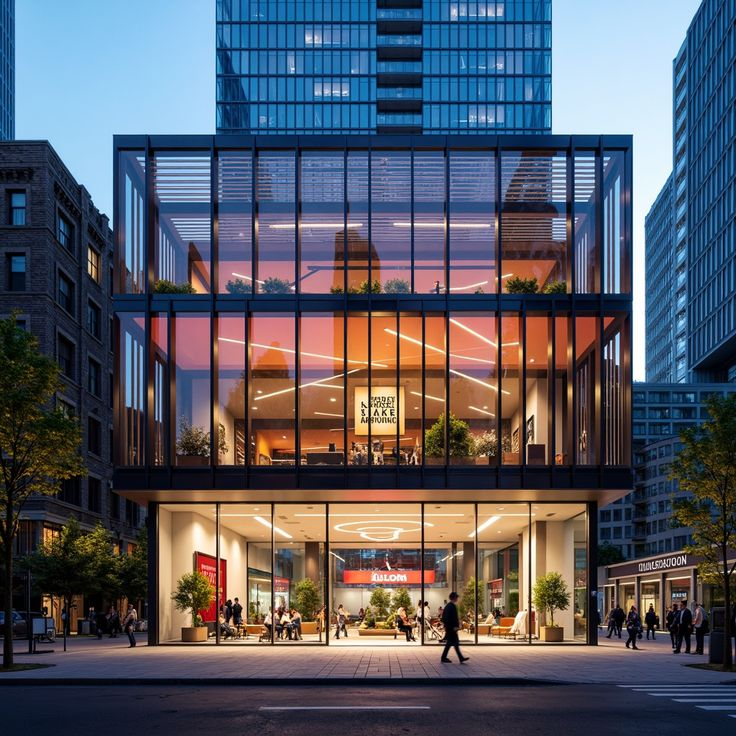
PwC’s “Emerging Trends in Real Estate® 2026” retail outlook further corroborates this positive momentum, noting that retail occupancy gains were recorded throughout 2024. The U.S. market saw positive net absorption of 21.2 million square feet, partly fueled by this limited development pipeline. This suggests that while the nature of retail is evolving, demand for well-positioned and experiential retail spaces persists. The notion of retail space for lease is increasingly about creating destinations, not just transactional points.
In Canada, retail markets have experienced similarly constrained supply and remarkably tight availability rates. Major markets such as Vancouver and Toronto have posted some of the tightest retail availability rates across North America. This reinforces the principle that tenant mix, localized consumer demand, and specific urban conditions are paramount drivers of success in the retail subsector, rather than a generalized global trend. Understanding the nuances of retail property investment in specific urban centers is crucial for navigating this sector.
Collectively, these data points underscore a critical insight: retail performance is not a monolithic global pattern. Instead, it diverges sharply by region and submarket, heavily influenced by local development pipelines, evolving consumer behaviors, and specific leasing dynamics.
Development and Supply Dynamics: A Constrained but Targeted Approach
Entering 2026, global commercial development levels in many markets are generally operating below previous peak cycles. Both Colliers and JLL’s analyses highlight a wide disparity in development pipelines, contingent upon regional financing conditions, construction costs, and local planning and zoning environments. Across numerous global markets, new commercial construction activity has decelerated compared to prior years. However, specific sectors, particularly logistics and specialized infrastructure, continue to attract targeted development efforts. This indicates a shift towards more cautious, needs-driven development rather than speculative building. The availability of commercial property for development remains a critical factor for growth.
Specialized Asset Classes: The Rise of Niche Opportunities
Beyond the traditional sectors, the growth of specialized asset classes is a significant trend shaping the commercial real estate landscape.
Data Centers: Powering the Digital Future
Global research continues to highlight the exponential expansion of data center real estate, intrinsically linked to the pervasive growth of cloud computing and the foundational infrastructure of the digital economy. Summaries referencing JLL’s comprehensive research estimate a compound annual growth rate of approximately 14% for global data center capacity between 2026 and 2030. This projected growth rate underscores the critical importance of this asset class, driven by the insatiable demand for data storage, processing, and connectivity. Investors looking for high-growth, tech-centric real estate investment opportunities are increasingly turning their attention to data centers. The demand for data center space is projected to soar.
A Global Framework, Executed Locally: The Exis Global Advantage
Across all analyzed regions and asset classes, a consistent and undeniable truth emerges from published research: commercial real estate outcomes are fundamentally driven by local market conditions, even within the overarching framework of the global economy. This is precisely where international collaboration, underpinned by a shared understanding of global trends, becomes operationally paramount. At Exis Global, our network of member firms operates across diverse international markets. Crucially, we achieve this by adhering to a common, data-led foundation. Global research provides the essential baseline context, offering a macro-level understanding of economic and market forces. However, it is local expertise – the granular, on-the-ground knowledge of specific urban dynamics, regulatory environments, and tenant demands – that truly informs effective execution. This synergistic approach ensures that strategic decisions are not only globally aligned but also precisely tailored to the unique characteristics of each geography, thereby avoiding the pitfall of assuming uniform market conditions. This is how we deliver superior commercial real estate advisory services.
As the global commercial real estate market continues its intricate dance between global forces and local realities, staying ahead requires a commitment to data-driven insights and localized expertise. Whether you are considering office space leasing in New York City, exploring retail investment opportunities in London, or seeking to understand the burgeoning industrial property market in Singapore, a nuanced, expert-led approach is indispensable.
To effectively navigate this complex and rewarding landscape, it’s imperative to engage with professionals who possess both a global perspective and a deep understanding of local market nuances. We invite you to connect with our team of experienced advisors to discuss your specific investment goals and to develop a tailored strategy that leverages the unique opportunities presented by the 2026 commercial real estate market. Let’s build your success, together.