
Navigating the Shifting Sands of Global Commercial Real Estate in 2026: An Expert’s Deep Dive
As seasoned professionals in the commercial real estate sector, we’ve spent the last decade observing, analyzing, and acting upon the intricate dynamics that shape this vital industry. Entering 2026, the landscape of global commercial real estate is anything but monolithic. While a shared global economic narrative is undeniable, its impact is felt profoundly differently across regions, cities, and even specific asset classes. This article aims to provide a data-led snapshot, drawing on verified insights from leading research organizations, to offer a nuanced understanding of where the market stands and, more importantly, where it’s heading. Our focus is on providing actionable intelligence for investors, developers, and occupiers seeking to capitalize on emerging opportunities within this complex environment.
The overarching theme this year is one of divergence. Gone are the days of broad-stroke market analyses yielding universal truths. Instead, success in commercial real estate in 2026 hinges on an acute awareness of hyper-local conditions, coupled with a robust understanding of macro-economic forces. This necessitates a commitment to thorough due diligence and a willingness to adapt strategies based on granular, verifiable data.

Global Capital Flows: A Tale of Two Hemispheres and Beyond
The pulse of any real estate market is its investment activity, and 2026 finds global capital deployment in a state of measured unevenness. Investor sentiment, fundraising efforts, and ultimately, transaction volumes are painting a diverse picture across North America, Europe, and the Asia-Pacific region.
Recent analyses from leading consultancies indicate that direct investments and separate accounts continue to be the preferred vehicles for institutional capital allocation. However, the velocity and volume of these allocations vary significantly, influenced by regional economic performance, geopolitical stability, and the attractiveness of specific asset classes.
In a standout performance, the Asia-Pacific region, particularly India, has demonstrated remarkable resilience and growth. Colliers’ data, as highlighted by The Economic Times, revealed that institutional real estate investment in India reached approximately $8.5 billion in 2025. This represents a substantial year-over-year increase of roughly 29%, signaling strong investor confidence in India’s economic trajectory and its burgeoning real estate sector. This surge underscores the importance of identifying and capitalizing on high-growth emerging markets within the broader global framework.
Conversely, while North America and Europe remain significant investment hubs, the pace of deployment is more calibrated. Investors are exhibiting a heightened degree of selectivity, prioritizing assets with strong underlying fundamentals and clear upside potential. The concept of cross-border real estate investment is not new, but the current climate demands a more sophisticated approach, one that balances global diversification with deep local market penetration. Understanding commercial property investment trends requires an ongoing commitment to tracking these capital movements.
Sectoral Performance: A Granular Examination of Global Markets
The performance of individual real estate sectors in 2026 is a mosaic, with each segment exhibiting unique drivers and challenges. This is where the true depth of commercial real estate analysis becomes critical.
Industrial and Logistics: The Unstoppable Engine of Global Trade
The industrial and logistics sector continues its reign as a cornerstone of global commerce. Driven by persistent demand for efficient supply chains, robust manufacturing activities, and the relentless expansion of e-commerce, logistics facilities remain a hotbed of activity. JLL’s research consistently points to sustained demand for warehouse and distribution space, directly correlated with evolving trade flows and regional manufacturing output.
In an era where supply chain resilience is paramount, companies are not just seeking space but strategic locations that optimize delivery times and minimize logistical friction. This has led to a renewed focus on industrial property investment in key transit hubs and areas with strong labor availability. The demand for logistics real estate opportunities is expected to remain robust throughout 2026, fueled by ongoing digitalization and the need for advanced fulfillment centers.
Office: Reimagining the Future of Work
The office market in 2026 is perhaps the most polarized sector, with performance diverging dramatically based on location, building quality, and the evolving needs of the modern workforce. While the narrative of a “death of the office” is overly simplistic, it’s undeniable that occupancy, vacancy, and leasing metrics are reflecting a fundamental shift.
Globally, JLL’s data indicates persistently elevated office vacancy rates in many major metropolitan areas. However, the key differentiator lies between newer, higher-quality buildings (often categorized as Class A or prime assets) and older, less amenity-rich stock. Prime assets situated in central business districts (CBDs) are generally demonstrating higher occupancy and leasing activity, attracting tenants seeking premium environments that foster collaboration and employee well-being.
In the United States, a report by PwC and ULI’s Emerging Trends in Real Estate® 2026 highlights that overall U.S. office vacancy exceeded 18% in 2024, with significant variations by market and asset quality. The report accurately observes that leasing activity has been heavily concentrated in Class A and newly renovated buildings. Older properties, unfortunately, continue to grapple with higher vacancy and the challenge of attracting tenants without substantial upgrades. This dynamic underscores the critical importance of investing in and acquiring premium office space that meets the demands of today’s businesses. For companies considering office space solutions in New York City or office leasing in Los Angeles, the distinction between prime and secondary assets is more crucial than ever.
European office markets, according to JLL research, are also exhibiting city-specific outcomes. Gateway cities with robust economies and limited supply of high-quality space are seeing stronger occupancy levels. Conversely, many European markets are experiencing constrained development pipelines due to a confluence of financing challenges and stringent planning regulations, which paradoxically can support rental growth in prime locations. The focus here is increasingly on sustainable office buildings and those offering flexible workspace arrangements.
Retail: Adapting to Evolving Consumer Habits
The retail real estate sector, often perceived as being in perpetual flux, continued its evolutionary journey through 2024 and 2025, setting the stage for 2026. Measurable movements in occupancy, absorption, and development patterns are clearly illustrating the location-specific nature of this sector.
In the U.S. retail market, JLL data provides a positive signal: net absorption turned positive in 2025, recording 4.7 million square feet of positive net absorption in the third quarter of 2025 following two prior quarters of decline. This turnaround, while modest, is attributed to a combination of limited new construction and strategic demolitions of older, underperforming spaces, which has effectively tightened the available stock for leasing.
PwC’s Emerging Trends in Real Estate® 2026 outlook for retail echoes this positive sentiment, noting that retail occupancy recorded gains in 2024 with 21.2 million square feet of positive net absorption in the U.S. market. This buoyancy is partly supported by a constrained development pipeline, preventing an oversupply of new retail space. The focus for retailers remains on creating experiential destinations and leveraging omnichannel strategies. For businesses looking for retail space for lease in Chicago or shopping center investments in Texas, understanding consumer demographics and the local retail mix is paramount.
Canada’s retail markets have also experienced constrained supply and tight availability rates. Major markets like Vancouver and Toronto are posting some of North America’s tightest retail availability, a clear indicator of how tenant mix and local economic conditions are driving outcomes in specific cities. This reinforces the notion that retail property trends are not uniform and demand deep, localized understanding.
The overarching takeaway for retail is clear: performance diverges sharply by region and submarket, heavily influenced by local development pipelines, consumer demand patterns, and agile leasing strategies, rather than exhibiting a uniform global trend.
Development and Supply Dynamics: A More Measured Pace
Entering 2026, global commercial development levels in many markets are generally operating below previous peak cycles. Both Colliers and JLL highlight that development pipelines are highly varied by region and asset class, significantly influenced by prevailing financing conditions, escalating construction costs, and local planning and zoning environments.
Across numerous global markets, new commercial construction activity has slowed compared to preceding years. However, specific sectors, most notably logistics and specialized infrastructure like data centers, continue to see targeted and strategic development. This measured approach to new supply is a critical factor in the current market equilibrium, helping to prevent overbuilding in sectors that still exhibit robust demand. Understanding commercial construction trends is therefore essential for anticipating future supply-demand dynamics.
Specialized Global Asset Classes: The Rise of the Digital Infrastructure
Beyond the traditional sectors, the landscape of commercial real estate is increasingly defined by specialized asset classes, none more prominent than data centers. Global research consistently highlights the ongoing and substantial expansion of data center real estate, intrinsically linked to the proliferation of cloud computing and the critical need for robust digital infrastructure.
Summaries referencing JLL research estimate a remarkable annual growth rate of approximately 14% between 2026 and 2030 for global data center capacity. This explosive growth trajectory underscores the immense demand driven by artificial intelligence, big data analytics, and the ever-increasing volume of digital information being generated and processed worldwide. For investors seeking exposure to high-growth, technology-driven real estate, data center investment opportunities represent a significant frontier. This is a sector where hyperscale data center development is reshaping the real estate investment map.
A Global Framework with Local Execution: The Exis Global Advantage
The data, the trends, and the localized nuances all point to a consistent conclusion: commercial real estate outcomes in 2026 are fundamentally driven by local conditions, even within the overarching context of a global economic environment. This is precisely where international collaboration, executed with local precision, becomes operationally invaluable.
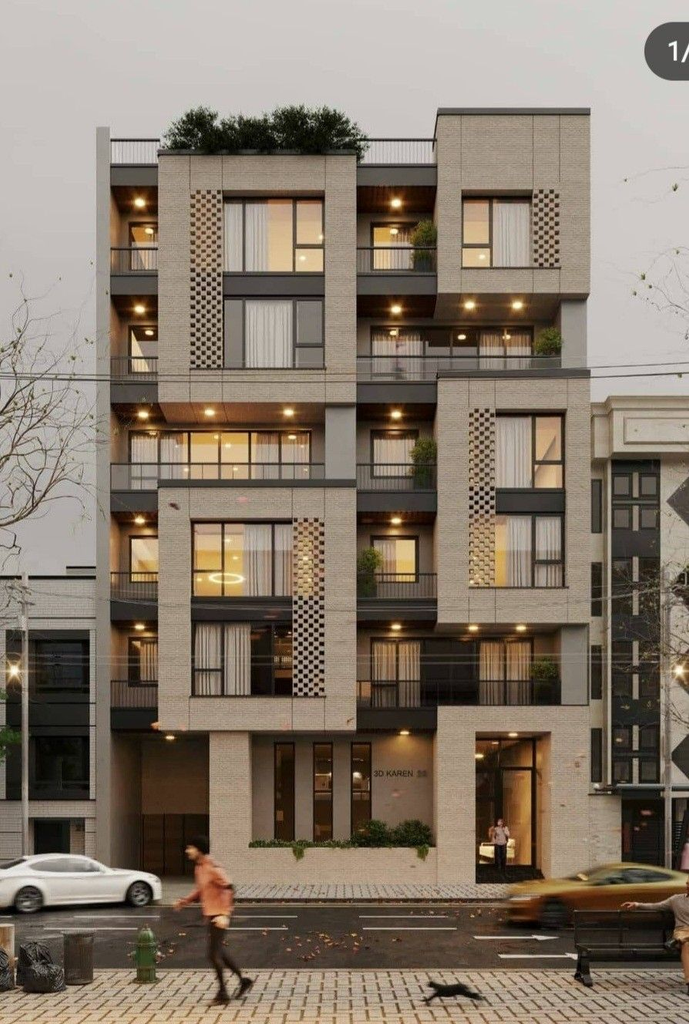
At Exis Global, our network of member firms embodies this philosophy. We operate across diverse markets, united by a common, data-led foundation. Our global research provides the essential baseline context, equipping our clients with a comprehensive understanding of macro forces at play. Crucially, this is then amplified by deep local expertise, informing every aspect of execution. This integrated approach ensures that strategic decisions are not only aligned across geographies but are also acutely tailored to the specific realities of each market, preventing the costly assumption of uniform conditions.
For businesses navigating the complexities of international real estate markets, the partnership with firms that possess both global reach and hyper-local insight is not just an advantage—it’s a necessity. We empower our clients to identify and capitalize on global commercial property investments with confidence, grounded in data and driven by localized expertise.
Conclusion: Charting Your Course in a Dynamic Market
The commercial real estate market in 2026 presents a complex yet opportunity-rich environment. The divergence in regional performance, the evolving demands of different asset classes, and the increasing importance of specialized sectors like data centers all require a sophisticated and data-informed approach. Understanding these intricate dynamics is the first step toward making astute investment decisions and securing optimal real estate solutions.
If you’re looking to leverage these insights to navigate the global commercial real estate landscape, whether seeking opportunities for commercial property acquisition or exploring strategic real estate development projects, our team is ready to provide the expert guidance and localized execution you need. Let’s connect and chart your course toward success in this dynamic marketplace.